
 Türkçe
 English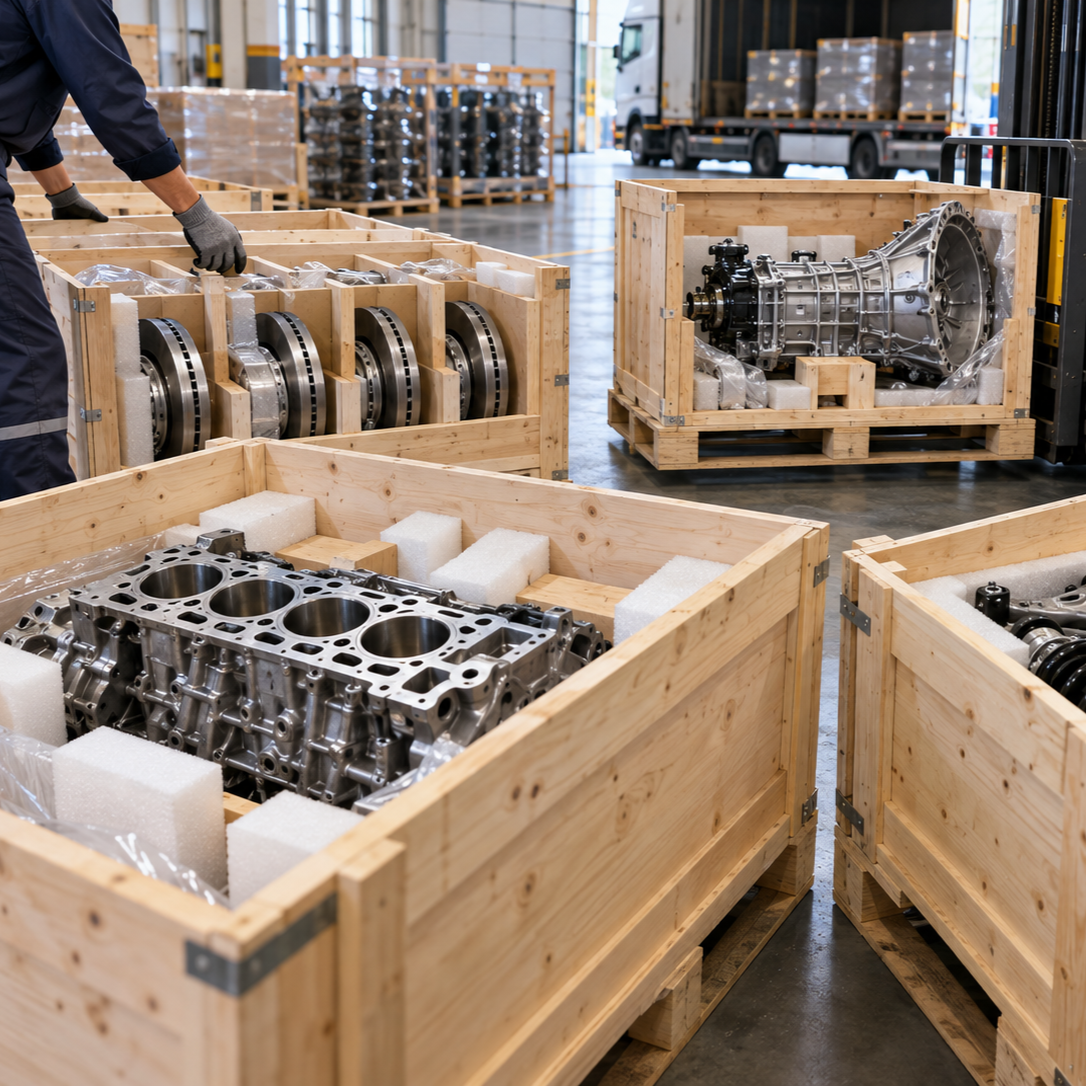
Packaging Requirements for Automotive Parts
Packaging in the automotive supplier industry is an important operational stage that prepares manufactured components for storage, internal handling, and shipment while preserving their quality characteristics. Parts used in the automotive production supply chain have different requirements in terms of physical dimensions, weight, surface sensitivity, and geometric structure. These differences make it necessary to plan packaging solutions according to product specifications and logistics processes.
Wooden crate solutions for the automotive supplier industry can be particularly suitable for transporting heavy, oversized, or industrial components requiring special protection when standard packaging systems are insufficient. A wooden crate designed according to product specifications helps restrict uncontrolled movement during transportation while supporting organized loading and unloading operations. The protective function of packaging should be considered throughout the entire supply chain, from the manufacturing facility to the customer.
Product Diversity and Packaging Requirements in the Automotive Supplier Industry
The automotive supplier industry encompasses the production of numerous components used in vehicle manufacturing and maintenance processes. Engine mounting components, transmission parts, machined mechanical components, body elements, and production equipment may have different packaging requirements. While weight and load-bearing capacity are primary considerations for some products, surface protection, component separation, or precise positioning may be more important for others.
Due to this diversity, using the same wooden crate design for all automotive parts is not an appropriate approach. When selecting packaging, the condition of the component after manufacturing, shipping method, stacking requirements, and storage conditions should be evaluated. Particularly for components with machined surfaces, planning contact points inside the crate helps manage the risks of friction and scratching.
When packaging heavy or geometrically irregular components, weight distribution and the suitability of the base support structure become particularly important. Proper support of the product base helps create a crate construction compatible with handling equipment. Packaging designed according to the structural characteristics of the component contributes to restricting unnecessary movement during transportation and improving operational control.
Protection and Logistics Compatibility for Automotive Parts
Packaging requirements in the automotive industry extend beyond the physical protection of products. The positioning of packaging in warehouse areas, its compatibility with forklifts or pallet jacks, and its suitability for loading onto transportation vehicles must also be evaluated. Particularly in businesses managing regular component deliveries, ensuring that packaging systems are compatible with operational processes supports more controlled material flow management.
- Protection based on product specifications: Packaging requirements are determined by considering the component's weight, external structure, and surface sensitivity.
- Controlled positioning: When multiple components are transported within the same crate, measures are taken to prevent direct contact between products and restrict uncontrolled movement.
- Compatibility with handling equipment: The base construction of the wooden crate is evaluated according to the specifications of the lifting and handling equipment used at the facility.
- Storage organization: Packaging arrangements are developed to support product identification, separation, and storage under appropriate conditions.
- Shipment planning: The external dimensions and handling characteristics of the packaging are evaluated together with the logistics system to be used.
The Role of Wooden Crate Solutions in the Supply Chain
Packaging decisions in the automotive supplier industry establish a direct connection between production and logistics operations. An improperly selected packaging system may require components to be rearranged, additional protective measures to be implemented, or transportation plans to be modified. Such situations can complicate material management and shipment preparation processes for businesses.
Custom-sized wooden crate design enables the development of transportation and protection systems compatible with the physical characteristics of automotive parts. Sharing product dimensions, weight specifications, support points, and shipping conditions before production facilitates the assessment of packaging according to technical requirements. When necessary, internal dividers, suitable support elements, and product securing arrangements can also be incorporated into the crate design.
Determining packaging requirements on a component-specific basis in automotive supplier businesses helps preserve manufacturing quality throughout the shipping process and supports more systematic management of material movements. Evaluating wooden crate solutions together with product specifications, warehouse conditions, and transportation methods contributes to developing a practical and sustainable packaging approach within the corporate supply chain.
Reusable Crate Options
Reusable crate options in the automotive supplier industry are among the important logistics solutions that help businesses managing regular component shipments organize their packaging processes in a more structured and controlled manner. In continuous material movements between manufacturing facilities, component suppliers, and assembly plants, the ability to reuse packaging can provide advantages in terms of operational continuity and resource management. In particular, wooden crate solutions for the automotive supplier industry support the development of packaging systems that can be used across multiple transportation cycles when designed according to product specifications.
When selecting reusable wooden crates, focusing solely on structural durability is not sufficient. The methods used to open and close the crates, their storage and transportation when empty, inspection procedures, and maintenance requirements should also be considered during the design process. Factors such as the weight of automotive components, surface sensitivity, and shipping frequency influence the selection of an appropriate crate type.
The Role of Reusable Packaging in the Automotive Supply Chain
Production continuity in the automotive industry is directly related to the supply of components in accordance with established operational requirements. In supplier relationships involving regular shipments, reusable packaging can reduce the need to prepare new packaging for every transportation cycle. However, maintaining this advantage over time depends on properly organizing crate returns and conducting inspections after each use.
Reusable wooden crate systems are particularly suitable for operations involving regular transportation of the same product group. Preserving product-specific internal supports and securing points facilitates more standardized packaging procedures during subsequent shipments. If different products are intended to be transported in the same crate, the adaptability of the internal arrangement should also be evaluated.
Reusable Wooden Crate Alternatives
Crate options for the automotive supplier industry vary according to the geometric characteristics of the product and the structure of the logistics operation. Fixed-structure wooden crates, crates with removable or openable lids, and collapsible packaging solutions can meet different operational needs. When selecting a crate, the return transportation and storage of empty packaging should be considered alongside cargo safety.
- Fixed-structure wooden crates: These can be considered for product groups where maintaining the integrity of the load-bearing structure is important during regular shipments. The condition of connections and structural components should be inspected before reuse.
- Wooden crates with openable lids: These can provide operational convenience when components need to be placed into and removed from crates in a controlled manner. Lid and fastening systems should be designed to withstand repeated use.
- Collapsible plywood crates: These can support efficient space utilization during the storage and return transportation of empty packaging. The suitability of the system for the product's weight and protection requirements should be evaluated.
- Wooden crates with custom internal compartments: These can be equipped with dividers and supporting elements that allow multiple automotive components to be transported in designated positions. The objective is to prevent direct contact and uncontrolled movement between components.
Empty Return Logistics and Storage Planning
In reusable packaging systems, empty return logistics refers to the process of transporting crates back to the location where they will be used again after product delivery. Efficient management of this process directly affects the operational feasibility of the reusable packaging model. The space required for transporting empty crates, return frequency, and storage conditions should be evaluated in advance.
Collapsible crate systems can help reduce the space occupied by empty packaging in suitable operating scenarios. However, the ease of using the folding mechanism, the condition of fastening components, and the inspections required during reassembly must also be considered. For fixed-structure crates, stackability and warehouse space organization are among the primary operational criteria.
Quality Control and Maintenance Requirements for Reusable Crates
The ability to reuse wooden crates does not necessarily mean they will provide the same level of protection during every shipment. Wear, loosened connections, surface damage, and structural deformation occurring during use can affect packaging suitability. Therefore, regular inspections and necessary maintenance activities should be planned for reusable crate systems.
Particular attention should be given to internal support areas that come into contact with sensitive surfaces of automotive components. Foreign materials remaining from previous shipments, damaged separators, or displaced securing elements may cause product damage during subsequent use. Crates found unsuitable during inspection should not be returned to shipping operations until the necessary corrective actions have been completed.
The ISPM 15 compliance status of wooden packaging intended for reuse in international shipments should also be evaluated. Marking and treatment requirements that may apply following repairs, component replacement, or remanufacturing must be verified according to current regulations.
Successful implementation of reusable wooden crate systems in the automotive supplier industry depends on product-specific design, regular maintenance, controlled return logistics, and coordination between businesses. Monitoring packaging usage cycles and planning necessary maintenance activities support material management and operational standardization within corporate supply chain processes.
Use of Custom-Sized Wooden Crates and Pallets
The use of custom-sized wooden crates and pallets in the automotive supplier industry is an important packaging solution that supports the safe transportation and storage of components with different physical characteristics. Standard packaging systems may not be suitable for every product's weight, geometric structure, or protection requirements. Particularly for large mechanical components, automotive parts with sensitive surfaces, and equipment with irregular geometries, product-specific packaging solutions contribute to more controlled transportation operations.
When designing custom-sized wooden crates, weight distribution, support points, and shipping methods should be evaluated alongside the product's external dimensions. For wooden pallets, load transfer to the base, compatibility with handling equipment, and warehouse organization are primary considerations. Selecting the appropriate packaging system helps automotive suppliers achieve a balanced approach between product protection and operational efficiency.
Situations Where Standard Packaging Is Insufficient
Standard crates and pallets used in automotive component manufacturing can provide practical solutions for certain product groups. However, their suitability may be limited for specially shaped components, parts with concentrated weight distribution, or applications where surface protection is a priority.
Positioning a product inside packaging with excessive empty space can increase the risk of uncontrolled movement during transportation. Conversely, insufficient protective clearance may cause sensitive surfaces to come into contact with the packaging structure. Custom-sized wooden crate manufacturing enables the development of internal layouts and support systems tailored to the physical characteristics of each product.
Technical Criteria for Custom Wooden Crate Design
When manufacturing custom-sized wooden crates for the automotive supplier industry, the design process should not focus solely on the external dimensions of the product. The component's center of gravity, load-bearing surfaces, and securing requirements should also be considered essential design inputs. Particularly when transporting machined mechanical components, the internal crate arrangement should be planned according to the characteristics of the areas that come into direct contact with the product.
Support and separating elements used inside the crate can help restrict contact between components while transferring loads to appropriate support points. These protective arrangements must be designed to prevent damage to sensitive product areas.
- Product dimension assessment: The internal crate layout should be planned according to the component's physical structure and required protective clearances.
- Weight distribution: The way the load is transferred to the supporting base should be examined, and support points should be determined accordingly.
- Internal securing system: Solutions designed to restrict component movement during transportation should be developed according to product specifications.
- Handling equipment compatibility: Forklift and pallet jack operating requirements should be evaluated together with the base support structure.
- Storage conditions: Packaging positioning within the facility, accessibility, and stacking requirements, where applicable, should be planned in advance.
The Role of Custom-Sized Wooden Pallets in Automotive Logistics
Custom-sized wooden pallets are support systems designed to meet specific transportation and storage requirements of automotive components. For products that are not suitable for standard pallets, they can facilitate proper positioning of the load on the supporting base. Particularly when transporting components with wide bases, irregular shapes, or special support requirements, it is important to evaluate pallet design according to product characteristics.
In operations involving pallets, transportation safety does not depend solely on the structural characteristics of the pallet. Product positioning, securing methods, and potential movement during transportation must be considered together. Where necessary, additional support elements can be used to ensure proper product positioning.
Custom-sized pallets can also provide operational advantages in internal warehouse material handling. Using support structures tailored to product dimensions can help reduce unnecessary handling space under suitable conditions and support more organized loading operations.
Product Protection When Selecting Wooden Crates and Pallets
When choosing between wooden crates and pallets, the required level of product protection should be the determining factor. While pallet systems provide support from below and facilitate handling, properly designed wooden crates can also offer physical protection around the sides and top of the product. Evaluating the risk of external contact for automotive components with sensitive surfaces helps determine the most appropriate packaging type.
Enclosed wooden crates can be considered for products requiring protection against environmental influences and direct contact. More open handling systems may provide easier operational access when product characteristics and shipping conditions allow. The degree of enclosure, product protection requirements, and transportation conditions should be assessed together.
Packaging Planning Aligned with Production and Shipping Processes
Integrating custom-sized crate and pallet design with production planning in the automotive supplier industry supports more organized material flow management. Particularly for recurring component shipments, standardizing packaging dimensions and internal arrangements can make preparation and inspection activities more predictable.
Sharing product technical drawings, weight specifications, and transportation conditions during the packaging procurement process facilitates the development of a design tailored to operational needs. When warehouse layouts, loading equipment, and shipping arrangements are also included in the assessment, custom-sized wooden crate and pallet solutions can be planned in accordance with the operational requirements of the automotive supplier industry.
Reducing Damage and Scratch Risks
Ensuring that components manufactured in the automotive supplier industry are transported without damage is essential for preserving production quality and maintaining supply chain continuity. Automotive components with machined surfaces, sensitive connection points, or special geometries may be exposed to risks associated with impacts, vibrations, and friction during transportation. Product-specific wooden crate solutions help manage these risks in a controlled manner.
Packaging designed to reduce damage risks should consider the component's weight, surface characteristics, and positioning inside the crate. Proper support at suitable points and restriction of product movement are just as important as the structural strength of the wooden crate.
Protective Internal Design for Automotive Components
Dividers, support elements, and protective cushioning materials used inside wooden crates can help prevent direct contact between components or with packaging surfaces. Particularly in areas containing sensitive surfaces, protective materials must be selected according to product characteristics.
- Internal securing: Restricts components from sliding or moving uncontrollably during transportation.
- Surface protection: Helps reduce friction and scratching risks through the use of suitable protective materials.
- Component separation: Supports the safe positioning of multiple components within the same crate.
- Balanced support: Helps reduce localized stress by transferring product weight to appropriate load-bearing points.
When designing custom-sized wooden crates for the automotive supplier industry, protective measures should be planned according to the handling and contact conditions specified by the component manufacturer. Inspecting support points, securing elements, and protective materials before shipment enables an assessment of the packaging's suitability for transportation.
Ease of Internal Warehouse Handling
Internal warehouse handling processes in the automotive supplier industry are an important operational stage for managing material flow efficiently between production lines, intermediate storage areas, and shipping departments. Safely handling heavy, bulky, or sensitive automotive components requires packaging systems to be compatible with warehouse equipment and facility layout conditions. Wooden crate solutions designed according to product specifications support component protection while contributing to more controlled handling, positioning, and loading operations.
For warehouse applications, the external dimensions of wooden crates, base support construction, center of gravity, and forklift entry points should be evaluated together. Particularly in facilities where components are regularly transferred between different production areas, packaging compatibility with handling equipment can facilitate the standardization of operations. Packaging design should consider not only shipping requirements but also material movements within the facility.
Design Compatible with Forklifts and Pallet Jacks
Planning forklift and pallet jack entry points during wooden crate manufacturing for the automotive supplier industry is one of the fundamental criteria affecting warehouse safety. The crate's base support structure should allow handling equipment to access appropriate lifting points and ensure balanced load transportation. This design approach helps reduce the risks of uncontrolled movement and instability during handling.
- Forklift accessibility: Entry points beneath the crate should be designed according to the specifications of the handling equipment to be used.
- Weight distribution: The supporting base should be planned according to the product's support points and center of gravity.
- Warehouse compatibility: Crate dimensions should be evaluated alongside warehouse aisles, loading areas, and storage arrangements.
- Stacking safety: Stacking crates should only be permitted when structural suitability and load conditions have been verified.
Efficient Utilization of Storage Space
Determining wooden crate dimensions according to product characteristics can help optimize the use of warehouse space. Oversized packaging can complicate warehouse organization, while insufficient internal space may negatively affect product protection. Custom-sized wooden crate solutions allow packaging dimensions to be adjusted according to operational requirements while maintaining the necessary space for protective supports.
Packaging arrangements developed with consideration for warehouse racks, access aisles, and material preparation areas facilitate component identification and shipment preparation. For reusable crates, the storage of empty packaging and return logistics processes should also be planned separately.
Operational Standardization in the Automotive Supply Chain
Using standardized crate structures for specific product groups in regular automotive component shipments helps warehouse personnel carry out handling and positioning operations more predictably. Product-specific internal layouts, identifiable packaging structures, and suitable handling points support operational coordination.
Evaluating wooden crate and pallet solutions together with warehouse equipment, production workflows, and shipping conditions enables businesses to systematically plan material movements. Particularly in automotive supplier facilities with high component turnover, this approach supports the development of packaging systems that balance product safety with operational accessibility.
Differences Between Export and Domestic Shipping
Export and domestic shipments in the automotive supplier industry may involve different operational conditions in terms of packaging requirements. Automotive components shipped to domestic manufacturing facilities and those transported to international markets may differ in transportation routes, handling procedures, and packaging compliance requirements. Therefore, when selecting wooden crates, the logistics conditions of the destination market should be evaluated alongside the physical characteristics of the product.
While domestic shipping operations are generally organized between established supply locations, export operations may involve different transportation methods and international inspection procedures. Preparing wooden crate solutions for the automotive supplier industry according to these differences supports product safety and helps manage packaging-related operational risks.
Packaging Planning for Domestic Shipments
Domestic transportation may involve regular movement of automotive components between manufacturing facilities, warehouses, and assembly plants. Reusable wooden crates, custom-sized pallets, and internal support systems designed for specific product groups can be considered for these operations.
Shipping frequency, handling equipment, and return logistics for empty crates are important factors in packaging design. Particularly in supply chains where the same products are transported regularly, standardized crate dimensions can contribute to more controlled material flow management.
Wooden Crate Requirements for Export Shipments
For international automotive component shipments, wooden export crate design should consider both transportation conditions and the applicable packaging regulations of the destination country. Solid wood packaging materials may be subject to phytosanitary requirements under ISPM 15. Verifying appropriate treatment and IPPC marking requirements helps reduce the risk of packaging-related noncompliance during border inspections.
In export operations involving sea freight or multiple transportation methods, moisture exposure, vibration, cargo transfers, and securing requirements inside containers should also be evaluated. The protective structure of the wooden crate should be designed according to product sensitivity and shipping arrangements.
Selecting Appropriate Packaging Based on Shipment Type
- Domestic transportation: Regular shipment schedules, warehouse compatibility, and opportunities for packaging reuse may be primary evaluation criteria.
- International shipping: Destination country requirements, packaging compliance, and multi-stage transportation conditions should be considered.
- Product protection: Weight distribution, internal securing, and protection of sensitive surfaces are fundamental requirements for both shipment types.
Adapting packaging planning according to shipment type enables automotive suppliers to select custom-sized wooden crate and pallet solutions that meet their intended operational purposes. By evaluating transportation routes, product specifications, and logistics equipment together, a consistent packaging approach can be established from production through final delivery.
Supplier Standardization
Supplier standardization in the automotive supplier industry is important for maintaining consistent packaging quality and establishing compatibility between manufacturing processes and logistics operations. Ensuring that wooden crates procured at different times remain consistent in dimensions, construction, and protective characteristics facilitates material management. Particularly for companies managing regular component shipments, organizing wooden crate procurement according to established technical requirements supports operational efficiency.
Standardized packaging solutions help make automotive component protection procedures repeatable. Defining crate dimensions, internal securing points, and supporting structures in advance can simplify technical assessment processes for subsequent orders. However, special design requirements associated with different product groups must also be maintained.
Consistent Quality in Wooden Crate Procurement
In corporate procurement processes, quality consistency extends beyond material selection. Manufacturing methods, suitability of fastening components, dimensional consistency, and pre-shipment inspections should be evaluated together. Maintaining up-to-date technical drawings and product specifications is particularly important when manufacturing custom-sized wooden crates for the automotive supplier industry.
- Technical specification management: The structural and operational requirements of wooden crates should be clearly defined.
- Dimensional standardization: Approved design specifications should be used as the basis for recurring orders.
- Quality control: Crate construction, connections, and internal protective measures should be inspected according to established acceptance criteria.
- Supplier coordination: Order quantities, production schedules, and shipping requirements should be communicated between the relevant teams.
Long-Term Supply Planning
Planning recurring wooden crate and pallet requirements in advance helps automotive suppliers align packaging procurement with production schedules. Design records established for different product groups facilitate information transfer during repeat orders and help prevent unnecessary design modifications.
When evaluating wooden packaging suppliers, corporate procurement teams should assess technical communication capabilities, manufacturing consistency, and quality control practices together. Supply planning based on automotive component dimensions, weights, technical drawings, and shipping conditions enables the development of packaging solutions tailored to product specifications.