
 Türkçe
 English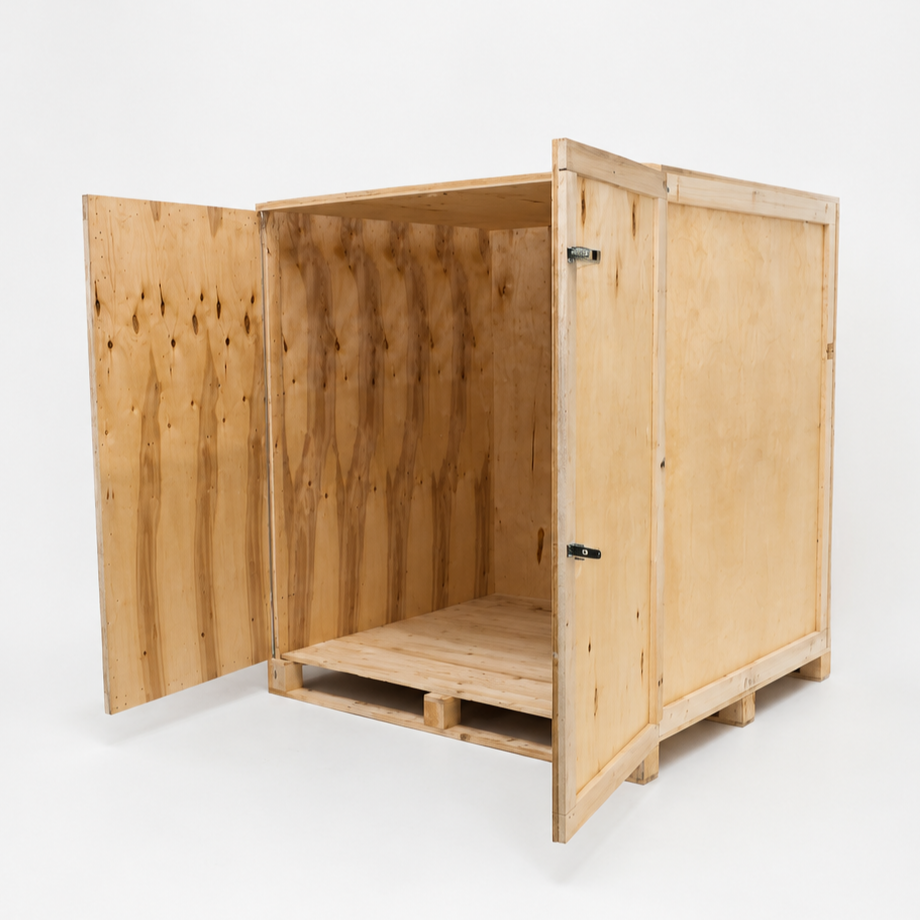
Primary Purpose of the Trade Show Crate
The primary purpose of a trade show crate is to transport exhibition equipment, promotional materials, booth components, and sensitive devices safely and systematically between different event locations. In trade show logistics, the same equipment can be shipped to multiple cities or countries in short intervals, unpacked at the event venue, and repacked once the event is complete. This high-volume operation requires a crate structure that is more durable and easily accessible than standard packaging prepared for a single shipment. Beyond providing transport protection, a trade show crate should be considered an operational system that supports quick retrieval of products, controlled removal, and repackaging in the same arrangement after the event.
Exhibition materials often consist of parts with varying sizes, weights, and sensitivities. Displays, lighting equipment, stand profiles, graphic panels, sample products, cables, fasteners, and promotional accessories can all be transported within the same event. Placing these parts haphazardly in a single large area can lead to collisions during transport or delays in finding needed parts at the event. A trade show case can be designed with appropriate compartments, fastening points, and labeled storage areas for each component. This transforms the case from simply packaging surrounding the products into a portable equipment setup that supports the stand setup sequence.
The need for repeated opening and closing is one of the key features that distinguishes a trade show crate from ordinary nailed wooden packaging. The crate's panels or lid must be removable in a controlled manner, and the connections must maintain their structural integrity with each use. Screw connections, metal clips, hinged surfaces, or different mechanisms suitable for the project can be used. Fixed storage areas should be provided to prevent the loss of removed connecting parts. Signs indicating which side of the crate should be opened first help the team at the event access the product without damaging the supporting elements. Not requiring special and hard-to-find equipment for the opening process can speed up the field operation.
Protecting sensitive equipment is another important purpose of a trade show case. Displays, sound systems, lighting devices, measuring equipment, prototypes, and exhibits with glossy surfaces can be affected by vibration, impact, and surface contact. Technical foam, felt, rubber pads, and product-specific inner housings can limit the movement of sensitive parts. The density and thickness of the protective material should be appropriate to the weight of the product. A foam that is too soft may lose its shape over time; an overly rigid support may transfer the impact to the equipment. The inner protection should work in conjunction with structural fastening and allow for easy repositioning of the correct position each time the case is opened.
The exhibition display case can be arranged to reduce setup and dismantling time in the event area. Stand components needed first can be placed in the most accessible section of the case, while accessories required later in the setup can be stored in separate compartments. Cables, connectors, and small parts can be kept in labeled boxes or closed compartments. Identifying each compartment with a product code, quantity information, or layout visuals makes it easier to identify missing parts before the event begins. Keeping the contents of the case organized helps prevent products from being scattered on the floor and delicate equipment from being left unattended in a busy setup environment.
Ease of transport and handling is also among the essential functions of a trade show crate. The base of the crate can be prepared to be compatible with forklifts, pallet trucks, or wheeled transport systems. If wheels are to be used, the total gross weight, floor structure, braking mechanism, and threshold crossings must be taken into consideration. Forklift access points should be positioned according to fork dimensions and center of gravity. For large crates to be transported by crane, lifting points should be directed towards the carrier base. Lids, panels, or decorative exterior surfaces should not be used as lifting points. Gross weight and correct transport directions can be visibly displayed on the crate.
Brand visibility and equipment concealment are complementary needs to consider in the exterior structure of the trade show case. Closed plywood or wood surfaces can separate exhibit products from direct view and unauthorized contact. Case number, event name, booth area, arrival hall, and contents information can be displayed on customizable label areas. For cases going to multiple trade shows, updatable label pockets can be used instead of fixed prints. External markings should not obscure forklift entries or IPPC stamps required for export. Matching the case ID with the list of equipment inside can reduce the risk of delivery to the wrong hall or booth in trade show logistics.
Operational Role of the Trade Show Crate
Transporting the product, protecting delicate equipment, arranging parts according to the installation sequence, quick opening and closing, and preparing for shipment again after the exhibition must all be combined in the same case design.
When requesting a quote for a trade show crate, the dimensions, weights, sensitive areas, usage sequence, and event schedule of all equipment to be transported must be shared. The number of times the crate will be used, the type of transport vehicle, whether it will be shipped internationally, and where it will be stored after the trade show should also be specified. Interior compartments, padding, removable panels, wheels, forklift access, and labeling areas can be planned based on this information. A reusable crate, prepared to suit the transportation, installation, dismantling, and return phases of trade show logistics, reduces equipment damage, part mix-ups, and repackaging time, supporting a more controlled organizational workflow.
Differences Compared to Standard Wooden Crates
The main difference between a trade show crate and a standard wooden crate lies in the packaging's lifecycle and how it's designed for field operations. While a standard wooden crate is typically prepared for single or limited-quantity shipments from the manufacturing facility to the customer, a trade show crate supports the repeated transport of the same equipment across different events. The trade show crate is opened at the event, the equipment is removed, reassembled once the event is complete, and then returned to the event route. This repeated use necessitates the construction of more durable and manageable fasteners, panels, base, and internal dividers.
Exhibition materials often consist of parts with varying sizes, weights, and sensitivities. Displays, lighting equipment, stand profiles, graphic panels, sample products, cables, fasteners, and promotional accessories can all be transported within the same event. Placing these parts haphazardly in a single large area can lead to collisions during transport or delays in finding needed parts at the event. A trade show case can be designed with appropriate compartments, fastening points, and labeled storage areas for each component. This transforms the case from simply packaging surrounding the products into a portable equipment setup that supports the stand setup sequence.
In terms of internal layout, a trade show crate requires a more modular and repeatable arrangement compared to a standard wooden crate. While a standard crate may focus on fixing a single machine to the base, a trade show crate can accommodate different parts simultaneously, such as displays, cables, lighting equipment, mounting hardware, graphic panels, and stand components. Shaped compartments, labeled eyelets, and protective surfaces can be prepared for each product. The order in which parts are removed can be reflected in the crate's layout. This arrangement helps prevent the entire equipment from being unloaded onto the floor during trade show setup and avoids the loss of small parts.
Frequency of handling varies, differentiating the strength of the base and outer body of the exhibition crate. While a standard wooden crate can withstand a limited number of forklift movements, an exhibition crate can be handled repeatedly in warehouses, vehicles, customs areas, exhibition halls, and return shipments. Forklift entry areas, crate corners, and panel connections can be reinforced for frequent use. If a wheeled design is preferred, wheel capacity, braking system, threshold crossings, and ground conditions must be considered. The tare weight of the crate and the total weight of the products should be included in the lifting equipment capacity. Decorative or enclosed panel surfaces should not be used as lifting points.
The internal protection of the exhibition case must withstand repeated removal and reinstallation of equipment. Single-shipment foam and padding materials may be damaged during unpacking or lose their shape after the first use. Technical foam, felt, rubber pads, and replaceable protective parts can be selected for reuse. Foam holders can be labeled to indicate which equipment they belong to, or a layout diagram can be used inside the case. While fixed chocks in a standard case are sufficient for a single load, in an exhibition case, the connections must be able to be repositioned correctly by field personnel. Incorrectly placed protective parts can cause sensitive equipment to move during transport.
Visual identification and shipment tracking also hold different levels of importance between the two types of checkout. In a standard checkout, customer, product, and shipping information can be applied to a single shipment. Since a trade show checkout will be used at different events, it may require customizable labeling areas, a checkout number, and an updatable list of contents. The event name, hall, booth number, delivery point, and return address may change for each organization. Fixed branding areas and temporary shipment labels must be separated. Failure to remove old event labels can lead to the checkout being directed to the wrong logistics area.
Maintenance and storage needs are more planned for trade show crates. After each event, the crate base, panels, connections, internal partitions, and protective foam should be inspected. Damaged parts should be replaced before the next trade show shipment. While standard crates can be decommissioned after delivery, trade show crates can remain in storage for weeks or months between events. The crate must be stored in a dry, clean area accessible to forklifts. Cables, fittings, and small parts remaining inside should be counted and matched against the crate inventory. It is important to separate crates ready for use from those awaiting maintenance.
Distinctive Design of the Trade Show Crate
Reclosable connections, modular interior compartments, a base suitable for frequent handling, interchangeable labels, and a planned maintenance system distinguish the trade show crate from a standard wooden crate.
When comparing standard wooden crates to custom exhibition crates for trade show equipment, the initial production cost should not be considered alone. The number of events the equipment will be used for, the number of opening and closing cycles per crate, the transportation route, the on-site setup time, the need for internal partitions, and the storage conditions between exhibitions should all be evaluated together. While a standard crate may suffice for a single exhibition shipment, for equipment with a regular exhibition schedule, a reusable exhibition crate can reduce packaging costs per shipment and setup time. Obtaining quotations based on the same technical specifications allows for a clearer assessment of differences in connection systems and lifespan.
Sensitive Equipment Protection
Exhibition crates provide protection for sensitive equipment; they aim to preserve the physical properties of displays, lighting devices, sound systems, measuring equipment, prototypes, and specialized exhibition products during repeated transport. Exhibition equipment may be handled multiple times in warehouses, vehicles, customs areas, event halls, and along the return route. Each transfer presents risks such as vibration, sudden movement, surface contact, and improper stacking. While the outer casing of the crate provides a barrier against direct contact, the actual protection of the product depends on the combined action of a suitable base, fastening system, and internal protective materials. Simply placing sensitive equipment inside the crate is not sufficient to ensure its safety throughout transport.
When preparing a protection plan, the equipment's load-bearing body and sensitive areas must be separated. The screen surface, lens, sensor, connection socket, button, thin cover, and decorative panel should not be used as support points. Internal wedges and holders should be positioned according to the product's main chassis, reinforced frame, or the transport zones specified by the manufacturer. Moving parts must be locked or confined with separate supports in the shipping position. The internal dimensions of the housing must include a safe tolerance where sensitive protrusions do not come into contact with panels or other equipment.
Technical foam, felt, rubber pads, and elastomer supports can be used to reduce direct contact between delicate equipment and wood. The density, thickness, and compression behavior of the protective material under load should be selected according to the weight of the equipment. Foam that is too soft may lose its shape with repeated use, creating voids around the product. Excessively rigid material, on the other hand, can transmit transport vibrations directly to delicate components. Shaped slots can guide the equipment to the correct placement and make it easier for field personnel to pack the product in the same position each time. Worn or crushed protectors should be designed to be replaceable.
When transporting multiple sensitive devices in the same exhibition case, the items should be placed in separate compartments. Heavier equipment can be kept near the bottom, while lighter accessories can be stored in secure boxes in the upper compartments. Dividers should be used to prevent contact between devices with hard surfaces. Small parts such as cables, adapters, connectors, and remote controls should not be placed on top of the main equipment. Labeled compartments help in quickly locating parts during setup and identifying missing items at the end of the event. Identifying each compartment with an equipment code or layout diagram can reduce packing errors.
Vibration protection should be considered in conjunction with the weight of the equipment and the transport route. Road, air, and sea transport can create different vibration and handling conditions. Suitable pads can be used to reduce the transmission of movement from the bottom of the case to the product; however, the product should not be allowed to move freely within the case. If the manufacturer of the sensitive equipment has transport limits or recommended shipping positions, the case design should be prepared according to this information. Equipment that should not be transported horizontally should not be placed in a different direction simply to save space. The correct orientation can be clearly indicated on the exterior surface.
Humidity, dust, and temperature variations can be as significant as mechanical damage to sensitive exhibition equipment. A sealed wooden crate can limit external contact and dust, but it does not, by itself, provide a waterproof or moisture-proof structure. For international shipments and long storage periods, barrier film, desiccant packs, or other appropriate protective measures may be considered. Equipment placed inside the crate must be dry and clean. The barrier material must be protected from sharp corners and protruding connections. Electronic equipment must be disconnected from power and prepared according to the manufacturer's transport conditions.
In reusable trade show cases, the internal protective elements should be checked after each event. Tears, permanent crushing, soiling, or disintegration in the foam housings can prevent equipment from being properly secured in new shipments. Felt and rubber surfaces should be cleaned, and adhesive bonds should be inspected for loosening. The visual representation of product placement inside the case should be compared with the current equipment list. When equipment models change, they should not be forced into the old housing; the internal layout should be rearranged. Keeping ready-to-use and maintenance-requiring protective sets separate makes pre-trade show preparation safer.
Protective Layers for Sensitive Equipment
The load-bearing base supports the load, structural fastening limits movement, technical foam and pads reduce contact, internal partitions separate components, and environmental protection manages the risk of moisture and dust.
When requesting a quote for a trade show case for sensitive equipment, the dimensions, weight, transport direction, sensitive areas, attachment accessories, and usage sequence of each device should be shared. Different transport routes, number of opening and closing cycles, storage time between events, and the number of items inside the case also affect the protection design. Performing a placement check with sample equipment before production helps demonstrate the suitability of foam inserts and fixing points. A trade show case, prepared with product-specific internal protection, regular maintenance, and repeatable packaging, supports more controlled transport and ready-to-install storage of sensitive equipment throughout a multi-event schedule.
Repeated Opening and Closing Requirements
Exhibition crates must be designed for a reusable opening and closing cycle, as exhibition equipment needs to be removed at each event and repacked once the event is complete. Single-shipment wooden crates often use nailed connections, which can damage panels and support elements during disassembly. For exhibition crates, however, screw-on panels, metal clips, hinged lids, or reusable connections suitable for the project can be preferred. This system prevents the crate from being disassembled uncontrollably to access the equipment. Ensuring the crate's outer casing and connection points remain functional for the targeted number of exhibitions is crucial in managing reuse costs.
When preparing a protection plan, the equipment's load-bearing body and sensitive areas must be separated. The screen surface, lens, sensor, connection socket, button, thin cover, and decorative panel should not be used as support points. Internal wedges and holders should be positioned according to the product's main chassis, reinforced frame, or the transport zones specified by the manufacturer. Moving parts must be locked or confined with separate supports in the shipping position. The internal dimensions of the housing must include a safe tolerance where sensitive protrusions do not come into contact with panels or other equipment.
The ease of use of fasteners directly affects installation and removal time. A large number of different screw types or fasteners requiring specialized equipment can waste time at the trade show. A standardized and durable fastening system should be used whenever possible. Applying screws to the same hole in plywood or wood surfaces in every cycle can reduce their holding power over time. Metal threaded sockets, mounting plates, or replaceable fasteners can support a longer service life. Removed screws and clips can be stored in a closed compartment on the case to reduce the risk of loss.
Hinged covers and panels provide ease of opening but require sufficient working space around the equipment. It may not be possible to fully open a large side panel in a narrow exhibition aisle. The panel weight must be within limits that field personnel can safely control, or an appropriate support mechanism must be used. The open panel must not protrude into the passageway and must not close uncontrollably during installation. In designs where the cover is completely detached from the casing, the part must be stored in an area where it will not be damaged during the exhibition. The opening method should be considered in conjunction with the exhibition hall entrance, booth area, and storage conditions.
Reclosing the case should be carried out with as much planning as the initial opening. Equipment should be placed in the correct internal compartments, all accessories counted, and protective foam inserts placed in their designated positions. Before closing the panel, check that no cables, straps, or small parts are trapped between the connections. Closing the outer cover without applying internal fasteners may cause the product to move around inside the case during return shipment. The layout diagram and equipment checklist help ensure correct repackaging in the busy post-exhibition disassembly environment. The case number and contents list should be rematched.
Internal protective materials are also subject to wear during repeated opening and closing. Foam inserts can tear when equipment is removed, felt surfaces can detach, and wedge connections can loosen. Before each closing, it should be checked whether the internal protectors are still restricting the movement of the product. Crushed or deformed foam inserts can create voids. The interchangeable nature of modular protective parts allows for maintenance without rendering the entire enclosure unusable. When the equipment model changes, it should not be forced back into the old internal insert; the internal layout should be updated to the new dimensions.
The number of times the exhibition display case is opened should be tracked in the maintenance schedule. After each event, the base, lid, panels, hinges, screw holes, clips, and corner connections can be inspected. The case number can be used to record which events it was used in and which parts were replaced. Cases ready for use should be kept separate from those awaiting maintenance. If recurring connection damage is observed, instead of simply replacing the part, the design's suitability for the frequency of use should be re-evaluated. Opening and closing feedback from the field team can contribute to improving the connection system.
Connection Scheme for Repeated Use
Standard connectors, numbered panels, screws concealed on the casing, interchangeable sockets, and a visible opening sequence speed up trade show operations.
The exhibition display case proposal should specify the target number of events, frequency of use per year, personnel required to open the case, site area, and available equipment. Checking the opening, product removal, repositioning, and closing steps on a sample case before production can highlight challenges in daily operations. Availability of connecting parts, maintenance methods, and replaceable panel options should also be included in the procurement scope. An exhibition display case designed for repeated opening and closing reduces setup time, case damage, and the need to prepare new packaging for each event, while maintaining the protection of exhibition equipment.
Internal Compartment and Foam Options
The internal partitioning and padding options in the exhibition case ensure that exhibition equipment of varying sizes and fragility is neatly protected within the same transport volume. Displays, lighting devices, sound equipment, cables, connectors, graphic panels, and sample products can come into contact with each other during transport when placed in a single space. Product-specific compartments define the location of each part within the case and limit the equipment's movement. Labeled placement makes it easier to find the necessary parts during exhibition setup. Reapplying the same arrangement after the event is complete reduces the risk of packing errors and the loss of small accessories.
When preparing a protection plan, the equipment's load-bearing body and sensitive areas must be separated. The screen surface, lens, sensor, connection socket, button, thin cover, and decorative panel should not be used as support points. Internal wedges and holders should be positioned according to the product's main chassis, reinforced frame, or the transport zones specified by the manufacturer. Moving parts must be locked or confined with separate supports in the shipping position. The internal dimensions of the housing must include a safe tolerance where sensitive protrusions do not come into contact with panels or other equipment.
In foaming applications, the density, thickness, and form-retaining properties of the material should be selected according to the weight of the equipment. Soft foam can protect the surface of light and delicate accessories, but it can be permanently crushed under heavy equipment. Denser technical foam can hold the equipment in a specific position in molded housings. Very hard material, however, can transmit impact and vibration to the product. When selecting protective material, not only the initial use but also the number of times the exhibition case will be opened and closed should be considered. Parts that lose their shape with repeated use should be replaceable.
The molded foam slots help ensure equipment is placed inside the case in the correct direction. The cutouts should be designed to fit the device's body and avoid putting pressure on sensitive areas such as screens, lenses, buttons, and connectors. Instead of gripping the entire surface of the product tightly, support should be provided at points of sturdy body material. A finger or grip gap inside the slot makes it easier to remove equipment without pulling on the foam. A product name or code can be added to each slot. An empty compartment allows for quick identification of missing equipment during post-exhibition packaging.
Felt, rubber pads, and surface protective coatings are complementary options for foaming. Felt can reduce friction between wood partitions and glossy or painted surfaces. Rubber pads can limit slippage at base contact and the transmission of certain vibrations. A thin protective film can protect the product surface from dust and minor scratches. The adhesives for these materials should not leave marks on the surface during long storage periods and should not detach with temperature changes. The areas where the protectors will directly contact the equipment should be checked according to the surface properties of the product.
Small accessories can be stored in enclosed boxes, drawers, or compartments with lids. Leaving parts such as cables, adapters, screws, remote controls, and mounting hardware on top of the main equipment can cause surface damage during transport. The number of parts and their product codes that should be present in each compartment can be clearly displayed. Heavy accessories should be kept close to the bottom of the case, while lighter parts can be carried in the upper compartments. Drawers and lids should have a locking system to prevent them from opening during shipping. Internal accessory boxes should be placed in a way that does not disrupt the overall weight distribution of the case.
The modular interior layout allows the same exhibition crate to be used for different equipment sets at various events. Removable foam cassettes, screw-in dividers, and interchangeable accessory boxes can be rearranged according to the event content. However, the total weight, center of gravity, and support base capacity should be checked with each new arrangement. A compartment designed for a lightweight promotional item may not be safe to use with a heavy device. Matching modules with case numbers and equipment sets can prevent incorrect placement. Unused interior modules should be stored in a clean, dry area where they will retain their shape.
Tasks of Internal Protection Options
The compartments separate items, the molded foam supports correct placement, the felt surface provides protection, the rubber pad reduces contact, and the closed pockets organize small accessories.
The exhibition display case proposal must include a separate description of each piece of equipment to be transported, including dimensions, weight, sensitive surfaces, accessories, and installation sequence. The internal layout drawing can show which part belongs to which compartment, foam density, contact points, and interchangeable modules. Pre-production layout checks using actual equipment or measured samples help verify gaps and pressure points. The reusable internal partitioning and foaming system allows for equipment separation during transport, quick retrieval at the exhibition venue, and repackaging with the same protective arrangement after the event.
International Trade Show Transportation
International trade show transportation is a time-sensitive logistics process requiring exhibition equipment to arrive on time, clear customs, and be delivered ready for setup at the exhibition venue by a specific event date. Trade show crates must not only protect products during road, air, or sea transport but also accommodate transshipment, temporary storage, and in-event handling. Unlike standard delivery shipments, the same equipment is re-crated after the trade show concludes and moved to the return or next event route. Therefore, crate dimensions, fastening system, internal layout, and external labeling must be designed considering both outbound and return operations.
When preparing a protection plan, the equipment's load-bearing body and sensitive areas must be separated. The screen surface, lens, sensor, connection socket, button, thin cover, and decorative panel should not be used as support points. Internal wedges and holders should be positioned according to the product's main chassis, reinforced frame, or the transport zones specified by the manufacturer. Moving parts must be locked or confined with separate supports in the shipping position. The internal dimensions of the housing must include a safe tolerance where sensitive protrusions do not come into contact with panels or other equipment.
In international shipments, identification information on the outside of the crate facilitates routing the equipment to the correct country, exhibition center, and booth. Crate number, event name, hall and booth information, delivery point, gross weight, and external dimensions can be displayed in visible areas. For equipment sets consisting of multiple crates, team sorting such as “1/5” or “2/5” can be used. Interchangeable label areas allow for the reuse of the same crate at different events. Directional labels from previous exhibitions must be removed or rendered invalid before new shipments. Lifting and center of gravity markings must be separate from commercial labels and easily visible.
For wooden exhibition crates, international phytosanitary conditions must be assessed according to the material structure used. Solid wood base rails, crossbars, uprights, and wedges may be subject to ISPM 15 requirements for export shipments. The use of plywood surfaces does not eliminate the need to inspect the solid wood components in the crate. Appropriate heat treatment and legible IPPC marking should be included in the production plan where necessary. In reusable crates, subsequently added wood parts of unknown origin may affect traceability. Repairs and part replacements should be carried out considering the crate's suitability for the new international route.
In customs and temporary admission processes, the orderly and countable contents of the crates support the operation. The name, quantity, serial number, and intended use of the equipment in each crate can be matched with the contents list. Consistency must be maintained between the crate number and the shipping and commercial information. Whether the equipment is temporarily entering the country for a trade fair or will be removed after the event may require different procedures depending on the shipping method and country. Current requirements should be confirmed with the customs agent, the trade fair logistics company, and the event organizer prior to shipment. The crate design should allow for controlled inspection of the product when necessary.
On international routes, humidity and climate changes can affect the protection of sensitive equipment. Closed wooden crates can limit dust and direct contact; however, they should not be considered waterproof or moisture-proof on their own. Temperature variations in sea freight containers can cause condensation. For electronic and metal equipment, barrier film, desiccant packs, or corrosion protection appropriate to the product may be considered. In air freight, equipment that may encounter varying temperature and pressure conditions should be prepared according to the manufacturer's recommendations. The product must be dry before being loaded into the crate, and disposable inner protective materials should be replaced if necessary during return shipments.
Delivery timeframes and handling methods at the exhibition area are crucial components of the logistics plan. Large exhibition centers may allow vehicle entry during specific hours and temporarily store crates in a shared storage area. The crate's forklift access, wheels, or crane lifting points must be compatible with the equipment on site. Hall entrance, cargo lift, corridor, and booth area dimensions should be compared to the crate's external dimensions. If the crate cannot be stored behind a booth during the event, it should be sent to an empty packaging warehouse and returned after the exhibition ends. Crate numbering facilitates the return of the equipment to the correct booth during this process.
Basic Data for International Trade Fair Shipments
The event date, country and venue, transportation method, crate size and weight, contents list, ISPM 15 requirements, delivery interval, and return route must all be planned together.
When preparing a proposal for an international trade show crate, the destination countries, type of transport, event schedule, equipment list, sensitive items, and on-site conditions at the exhibition center should be shared. The design should include the possibility of reopening and closing the crate, placing it in temporary storage, and moving it using different transport equipment. Before shipment, external dimensions, gross weight, crate numbers, IPPC markings, internal fastenings, and up-to-date labels should be checked. A reusable trade show crate, prepared to be compatible with the customs, transport, hall delivery, and return stages of trade show logistics, reduces time loss and the risk of equipment damage, supporting a more orderly progress of the event program.
Post-Show Storage Plan
A post-exhibition storage plan involves the systematic crating, transportation to storage, and preservation of exhibition equipment at the end of the event, ensuring it is ready for the next event. The exhibition crate can serve as the primary storage area for products not only during transport but also for weeks or months between events. Misplacing parts in the wrong crate during disassembly, losing small accessories, or storing damp equipment in a closed crate can complicate preparations for the next exhibition. Therefore, the storage process should not be viewed as an unplanned collection operation that begins at the end of the event; crate number, contents list, control sequence, and storage location should be predetermined.
When preparing a protection plan, the equipment's load-bearing body and sensitive areas must be separated. The screen surface, lens, sensor, connection socket, button, thin cover, and decorative panel should not be used as support points. Internal wedges and holders should be positioned according to the product's main chassis, reinforced frame, or the transport zones specified by the manufacturer. Moving parts must be locked or confined with separate supports in the shipping position. The internal dimensions of the housing must include a safe tolerance where sensitive protrusions do not come into contact with panels or other equipment.
Trade show crates accepted into the warehouse should be inspected for external damage and transport safety. Check for forklift impacts on the base slides, cracks in panels, loose connections, or brake problems in wheeled crates. The contents of the crates can be verified to match the list prepared at the event's exit. Crates ready for use, those awaiting maintenance, and those with missing internal equipment should be managed under separate categories. If a damaged crate is moved directly to long-term storage, the problem is often only noticed just before the next trade show. Early inspection allows more time for parts replacement and repair.
The storage area must be dry, clean, well-ventilated, and accessible to forklifts. Wooden exhibition crates should not be placed directly on the ground, on surfaces prone to water accumulation, or on walls that are constantly damp. While base rails may lift the crate from the ground, they alone do not provide sufficient protection against prolonged exposure to water and moisture. Large temperature fluctuations in the storage area can cause condensation inside the crate. For sensitive electronic and metal equipment, internal humidity control, desiccant replenishment, and the condition of barrier packaging should be evaluated separately. Irregular stacking that completely obstructs air circulation around the crate should be avoided.
If stacking of crates is planned, the stacking capacity of each exhibition crate must be verified during the production phase. A flat lid surface does not automatically mean the crate is suitable for overhead load support. The base of the upper crate must be on the same vertical line as the supporting uprights and corner points of the lower crate. Heavier crates should be placed in the lower rows, and crates of different sizes should not be stacked unevenly. The permitted stacking number and overhead load limit can be indicated on the crate. In racked storage, the size and capacity of the shelf compartment should be checked against the external dimensions and gross weight of the completed crate.
The crate ID and warehouse location affect the speed of preparing for the next event. Each trade show crate can be assigned a permanent number; the contents list, equipment serial numbers, expiration date, maintenance status, and warehouse shelf can be associated with this number. Event-specific hall and booth labels should be removed upon return to warehouse, but the crate ID should be retained. If there are different equipment sets for multiple organizations, crates can be classified by event or product group. Digital inventory records make it easy to see which crates contain which equipment and which crates are ready for new shipments.
In long-term storage, periodic inspections should not be limited to examining only the exterior of the container. Connections, panel edges, internal foam, felt surfaces, desiccant materials, and equipment fixings should be inspected at specified intervals. Foam should be replaced if it is permanently crushed, soiled, or detached from its adhesive. Metal connections should be repaired if they show loosening or surface changes. When the container is moved to another location within the warehouse, forklift access points and the floor should be re-checked. After opening, the container should be closed with the same internal layout and protection arrangement.
Post-Fair Storage Cycle
Equipment inventory, placement in correct compartments, cleaning and drying, crate damage inspection, warehouse record keeping, proper stacking, and periodic maintenance should all be carried out within the same plan.
Identifier 'prev' has already been declared