
 Türkçe
 English
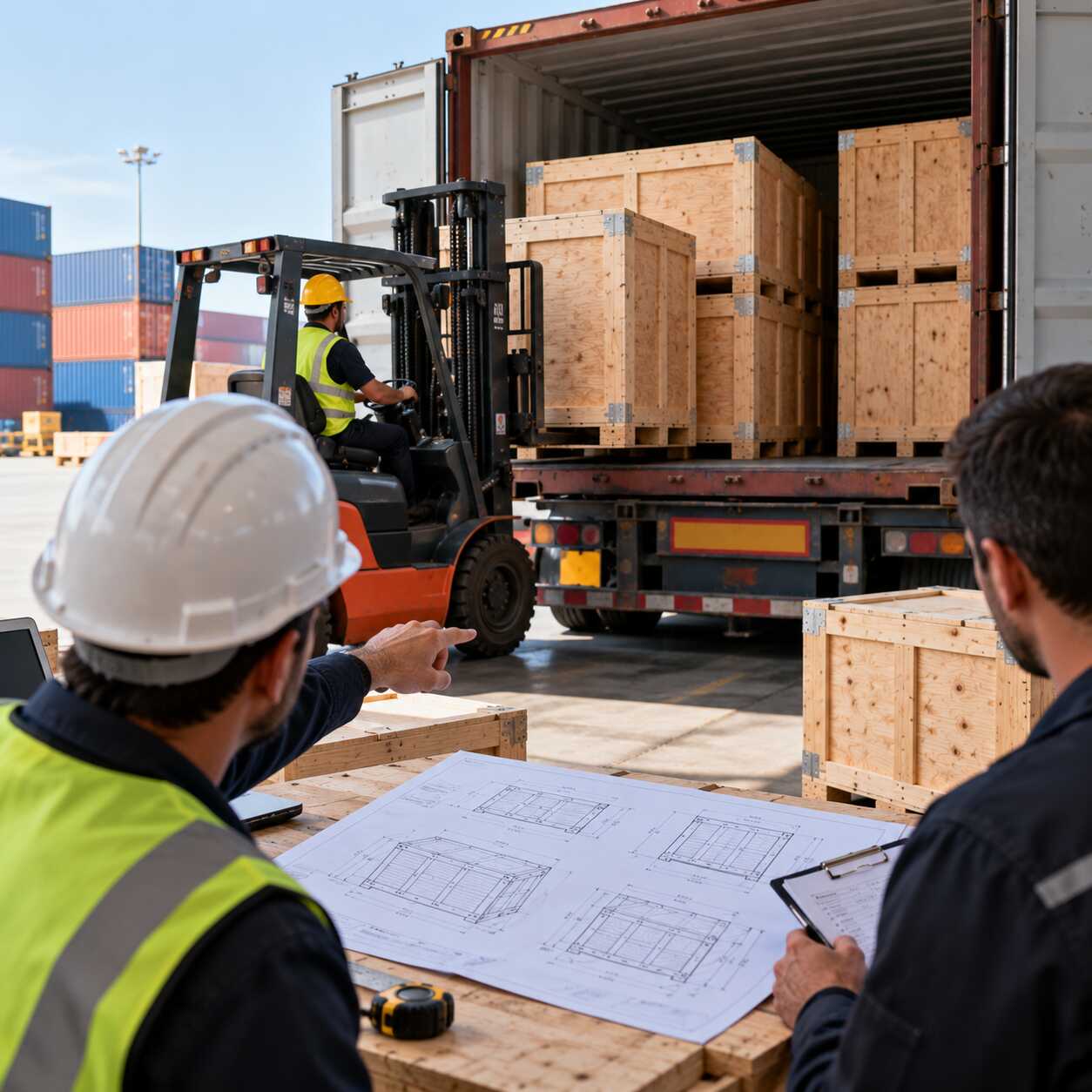
Balancing Weight and Volume
Balancing weight and volume is an important consideration in export crate design, helping make efficient use of transport capacity and control freight costs. For shipments of machinery, automotive components and industrial equipment, the packaging’s total weight is as relevant to logistics planning as its external dimensions. Oversized or unnecessarily heavy wooden crates can reduce usable vehicle capacity and add costs. Custom-sized wooden crates aim to protect the product while limiting unnecessary volume and material use.
Actual Weight vs. Volumetric Weight
Actual weight is the combined gross weight of the product and its packaging. Volumetric weight converts the space occupied by a shipment into a weight value using a specified conversion factor. The distinction is particularly important in air freight and some less-than-container-load (LCL) shipments.
The factor used to calculate volumetric weight may vary by carrier and service. Full-container-load ocean freight may use a different pricing basis. Exporters should confirm the calculation method stated in each freight quotation.
How Wooden Crate Weight Affects Logistics Costs
The skids, panels and internal supports of a wooden crate add to its gross weight. Their dimensions should be determined according to the product’s weight and the forces expected during transport. Unnecessary material can be reduced, but structural strength should not be compromised solely to lower weight.
For heavy machinery in particular, the vehicle’s permitted load limit may be reached before its usable volume is filled. The crate design should also account for the centre of gravity and safe load distribution.
Weight and Volume Optimisation Checklist
- Net weight: Confirm the weight of the product to be packed.
- Gross weight: Include the wooden crate and protective components in the calculation.
- External volume: Assess the crate using its finished dimensions.
- Freight pricing basis: Check the carrier’s weight and volume calculations.
- Structural safety: Verify how material changes affect strength.
Cost Considerations in Custom Crate Design
When comparing crate designs for export operations, consider more than the unit price of the packaging. Gross weight, external volume, loading capacity and handling requirements should all be assessed together.
Using the same dimension and weight data with both the packaging manufacturer and logistics provider makes it easier to compare options. Freight quotations for designs that meet the technical requirements help show how the balance of weight and volume in a custom wooden crate affects total shipping costs.
Container Loading Layout
Planning how export crates are arranged inside a container is an important step in making effective use of available transport space and managing freight costs. For shipments of machinery, automotive components and industrial equipment, the external dimensions, weights and loading orientations of the wooden crates determine the layout. Careful planning helps reduce unused space and make better use of available capacity while protecting the products.
Container loading cannot be planned by calculating the crates’ total volume alone. Door openings, internal dimensions, weight distribution, securing requirements and handling methods must also be considered. A layout that appears suitable by volume may not be practical to execute.
Arranging Crates to Fit Container Dimensions
When arranging wooden export crates, consider the container’s usable length, width and height. Crate dimensions must include forklift skids, lids and any protruding fittings.
For shipments with multiple crates in one container, alternative layouts can be prepared. Rotating the crates or changing their order may improve space utilisation, but lifting orientations and the product’s permitted transport position must be maintained.
Weight Distribution and Cargo Securing
Concentrating weight in specific areas of a container can create risks for the floor and transport safety. The placement of heavy wooden crates should be planned with the container’s technical limits and load distribution in mind.
Once loading is complete, the crates must be secured to prevent movement or tipping during transport. Reducing empty space alone is not enough to ensure cargo safety. Securing points and equipment must also be verified.
Container Loading Plan Checklist
- Crate external dimensions: Verify the actual dimensions of all packages.
- Container suitability: Check internal dimensions and door openings.
- Gross weight: Assess the total load and local weight distribution.
- Loading method: Plan forklift access and the space needed to manoeuvre.
- Cargo securing: Define measures to prevent shifting and tipping.
How Container Space Utilisation Affects Costs
Preparing the container loading plan before packaging production begins can help align crate dimensions with logistics requirements. Compare the number of crates that can be shipped, loading safety and any potential need for additional transport across alternative layouts.
Do not remove the clearance or securing space required to protect the products when optimising a layout. When the packaging manufacturer and logistics provider work from the same dimensional data, container space can be used safely and freight decisions can be supported by technical information.
Benefits of Custom-Sized Crates
Custom-sized wooden crates make it possible to develop packaging solutions suited to the physical characteristics of industrial products and their logistics requirements. Standard crate dimensions may not always make efficient use of space when exporting machinery, automotive components and heavy equipment. Export crates designed around the product can limit unnecessary packaging volume and improve container loading. This can help businesses plan freight costs more effectively.
The purpose of custom production is not simply to make the crate smaller. Secure product positioning, base strength, forklift access and protective materials must all be considered. Reducing packaging dimensions without meeting technical requirements can lead to additional damage costs.
Packaging Designed Around Product Geometry
Custom wooden crate design takes into account the product’s length, width, height and protruding components. Protective clearance and internal securing elements can be planned around the product’s actual geometry.
Reducing unused space caused by standard dimensions can be particularly useful for regularly shipped product lines. However, sensitive areas and safe support points specified in technical drawings must be protected.
Space Efficiency in Container Loading
Planning the external dimensions of a wooden export crate alongside the container layout can affect how many crates can be shipped. Comparing different loading scenarios can help make more efficient use of the available space.
Designing crate dimensions to work together can help reduce gaps, particularly when multiple products are shipped in the same consignment. Stacking and cargo-securing requirements must still be technically verified.
Key Considerations for Custom-Sized Crates
- Product dimensions: Confirm actual external dimensions and protrusions.
- Protection requirements: Plan internal supports and clearance around sensitive surfaces.
- Supporting structure: Ensure the base and connections are suitable for the product’s weight.
- Container fit: Verify door openings and usable dimensions.
- Cost comparison: Assess packaging price and freight impact together.
Total Cost Impact of Custom Wooden Crates
For export operations, the benefits of a custom crate design should not be assessed on production cost alone. Compare material usage, shipping volume, handling requirements and potential damage risks.
When the packaging manufacturer and logistics provider work from the same technical data, it is easier to compare design options. Custom wooden crates that meet product-protection and safe-transport requirements can make it possible to improve space utilisation in a measurable way during freight planning.
Foldable Plywood Crates and Empty Return Costs
Foldable plywood crates are an industrial packaging solution that allows empty packaging to be transported in a more compact form after delivery. For businesses that export regularly and plan to reuse their packaging, the cost of returning empty crates can be a significant part of total logistics expenditure. Traditional rigid crates retain much of their original volume when empty, while well-designed foldable systems can make better use of space on return journeys.
Reduced volume when empty should not be the only consideration when selecting a foldable plywood crate. Product weight, the connection system, reuse frequency and transport conditions should all be assessed. Not every foldable crate model is suitable for heavy or sensitive products.
What Makes Up the Cost of Returning Empty Crates?
Empty return costs arise when packaging is transported to another location for reuse after the product has been delivered. The main cost components include transport, handling, temporary storage and preparation of the packaging.
On international return routes, the space taken up by empty crates can be significant if the carrier charges by volume or vehicle capacity. Actual savings, however, depend on freight rates and the shipping arrangement.
How a Foldable Design Affects Space Utilisation
With foldable plywood crates, side panels and other components can be removed or folded down to create a more compact unit. This can make empty crates easier to arrange on the return journey.
To assess this benefit, compare the crate’s external dimensions when assembled with its dimensions when folded. Stack height, protection of connecting parts and safe transport conditions should also be taken into account.
Cost Factors When Selecting a Foldable Crate
- Folded volume: Confirm the actual external dimensions for the return journey.
- Reuse: Assess the planned number of use cycles and maintenance requirements.
- Connection system: Verify that the crate can be safely assembled and disassembled.
- Transport costs: Calculate return freight, storage and handling costs.
- Product suitability: Check that the crate construction meets the load requirements.
Comparing Total Cost of Use
For export operations, foldable plywood crates and rigid wooden crates should be compared by total cost of use rather than initial purchase price alone. Return frequency, the number of uses per crate and potential repair costs all affect the financial assessment.
If a crate contains solid wood components, the applicable ISPM 15 requirements should also be checked for international shipments. Including actual return dimensions in logistics quotations makes it possible to assess, using concrete data, how a foldable plywood crate may affect empty return costs.
Pallet and Crate Combinations
Combining pallets and crates for export shipments can help balance product protection with efficient use of transport space. Not every machine, automotive component or item of industrial equipment requires the same level of enclosed packaging. Protective structures secured to a wooden pallet may be sufficient for some loads, while sensitive or heavy products may require a fully enclosed export crate. Choosing the right packaging configuration can help limit unnecessary volume and control freight costs.
The choice of pallet and crate should not be based on packaging price alone. The product’s weight, geometry and surface sensitivity, as well as the transport route and loading method, should all be considered. Reducing the level of protection may eliminate expected savings if damage occurs.
Palletised Loads vs. Fully Enclosed Crates
A wooden pallet provides a base that makes it easier to move a product by forklift or other suitable equipment. However, an open pallet configuration may not protect the product from external factors as effectively as an enclosed wooden crate.
A fully enclosed export crate can provide more comprehensive physical protection through its side panels and top cover. As this option may increase the packaging’s external dimensions and weight, it should be assessed alongside logistics costs.
Space Utilisation with Hybrid Packaging
For some industrial products, a supporting pallet can be combined with partial wooden protective elements. This can protect critical areas of the product while reducing the material and volume required for a fully enclosed crate.
However, the hybrid structure’s load transfer, securing capacity and ability to withstand forces during transport must be verified. Protection for any exposed product surfaces must also be planned.
Checklist for Pallet and Crate Combinations
- Product sensitivity: Identify surfaces and components that require an enclosed crate.
- Load-bearing capacity: Ensure the pallet or crate base can support the total load.
- External dimensions: Compare the packaging’s actual volume with the container layout.
- Cargo securing: Assess the risk of the product shifting or tipping.
- Regulatory requirements: Check applicable ISPM 15 requirements for solid wood components.
How Packaging Combinations Affect Total Cost
For export operations, compare packaging costs, gross weight, external volume and handling requirements across different pallet and crate combinations. For regular shipments, the effect of alternative designs on the number of units that can be loaded per container can also be calculated.
When the packaging manufacturer and logistics provider use the same technical data, it is easier to compare protection requirements and cost expectations. A pallet and crate combination suited to the product supports more efficient transport planning without compromising shipment safety.
Cost Optimisation Checklist
Assessing export crate and freight costs together helps businesses use packaging resources efficiently for international shipments. For machinery, automotive components and industrial equipment, crate dimensions, gross weight, container layout and product-protection requirements all affect total logistics costs. A structured cost optimisation checklist makes it easier to compare packaging options and base design decisions on measurable data.
Cost optimisation does not simply mean choosing a smaller or lighter wooden crate. Safe transport, compatibility with loading equipment and potential damage costs must also be considered. A lower packaging price does not always mean lower total shipping costs.
Checking Packaging Dimensions and Transport Capacity
First, review the crate design using the product’s verified dimensions and weight. Consider reducing unnecessary external volume while maintaining internal protective clearance. Include forklift skids, lids and structural supports in the calculations.
For container or vehicle loading, account for door openings, weight limits and cargo-securing space. Compare the space savings offered by alternative crate dimensions against the actual loading layout.
Comparing Freight Quotations
Check whether carrier quotations are based on gross weight, volumetric weight, loading units or container capacity. The calculation method may vary by transport mode and service scope.
When comparing quotations, review not only the base freight charge but also handling, temporary storage, additional equipment and any other applicable costs.
Export Crate Cost Optimisation Checklist
- Product details: Have the dimensions, weight and sensitive areas been verified?
- Crate design: Has unnecessary volume been reduced without compromising structural strength?
- Gross weight: Have all packaging components been included?
- Loading plan: Have container and vehicle capacities been checked?
- Packaging alternatives: Have pallets, enclosed crates and suitable hybrid options been compared?
- Reuse: Have return and maintenance costs for foldable crates been assessed?
- Freight quotation: Have transport and additional service costs been compared on the same basis?
Assessing Total Shipment Costs
For export operations, the packaging manufacturer, procurement team and logistics team should work from consistent cost data. For each design, assess packaging production, freight, loading costs and potential damage risks together.
Approved crate dimensions and loading plans should be recorded in the shipment file. Comparing actual costs with estimates from the quotation stage can help improve dimension optimisation and freight planning for future export crate orders.