
 Türkçe
 English
Choosing the Wrong Pallet Size
One of the most common mistakes when using wooden pallets is choosing a size without first considering the product’s dimensions and logistics requirements. In production, warehousing and export operations, the wrong pallet size can destabilise the load, waste transport space and increase the risk of product damage. The widespread use of standard wooden pallet sizes does not mean they are suitable for every product. Pallet selection should account for the product’s geometry as well as the transport and storage systems in use.
When the Pallet Does Not Fit the Product
A pallet that is too small can leave the product overhanging its edges and inadequately supported. This can concentrate the load at specific points, particularly for heavy or sensitive products. Using a pallet that is larger than necessary can take up additional storage space and reduce shipping capacity.
When determining pallet dimensions, consider the product’s length, width, weight and centre of gravity. For packaged products, include the external dimensions added by protective materials.
Misapplying Standard Pallet Sizes
The 800 × 1,200 mm Euro pallet is a standard option used in many logistics operations. However, the product’s geometry, loading method or warehouse equipment may require different dimensions. Choosing a standard pallet solely because it is easier to procure can create operational problems.
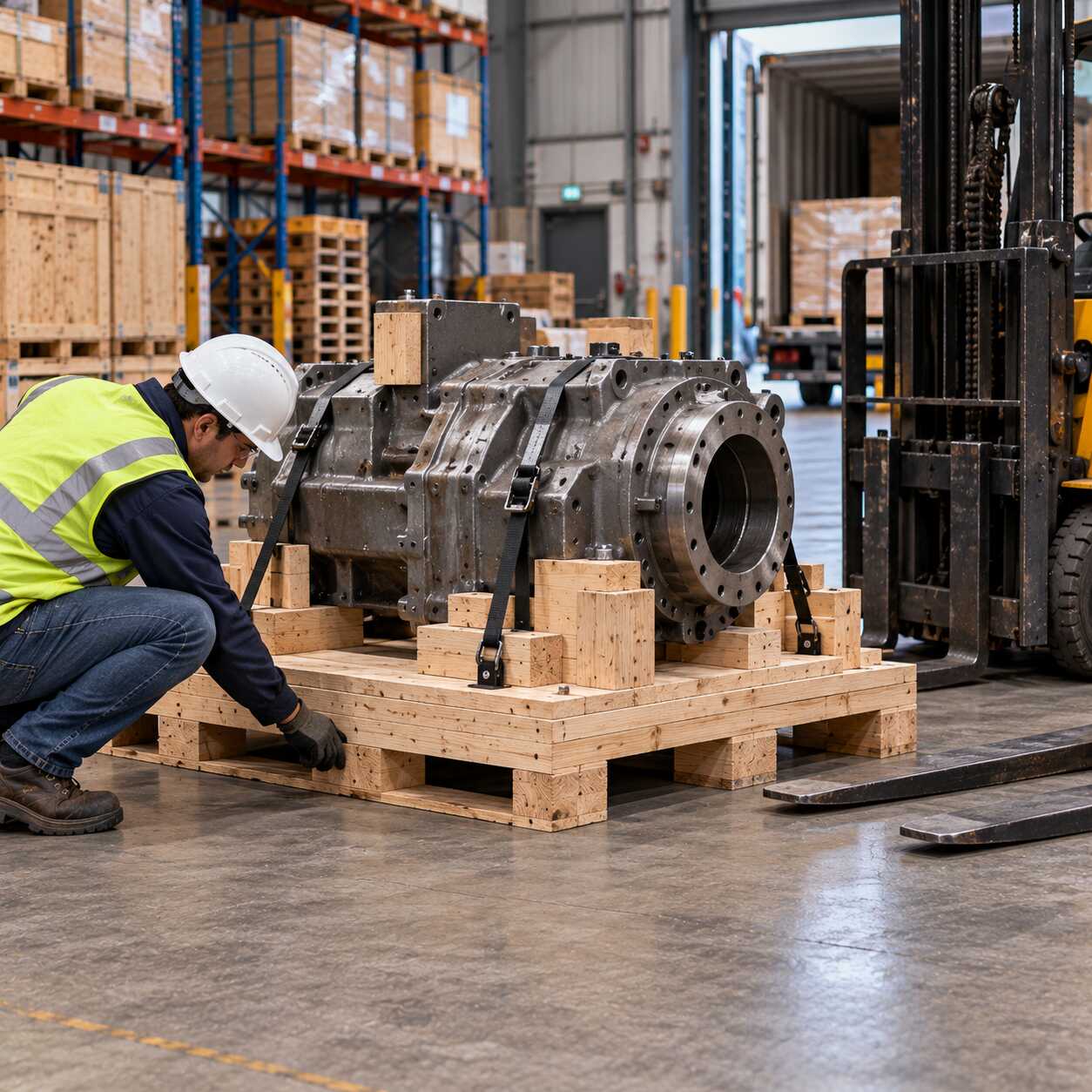
Custom-sized wooden pallets should be considered for large machinery components and loads with irregular shapes. The placement of the supporting components should also suit the product’s load distribution.
Compatibility with Storage and Handling Equipment
The wrong pallet size can be incompatible with racking systems, forklifts and pallet trucks. Entry directions and underside construction are as important as the pallet’s external dimensions. The equipment’s forks must be able to lift the pallet safely at the appropriate points.
For export shipments, pallet dimensions should also be assessed in relation to container and vehicle layouts. Unsuitable dimensions can reduce usable loading space.
Pallet Size Selection Checklist
- Product dimensions: Verify actual external dimensions, including packaging.
- Load distribution: Identify the centre of gravity and support points.
- Warehouse fit: Check rack openings and storage layout.
- Handling: Assess forklift and pallet truck entry directions.
- Transport: Check compatibility with vehicle and container dimensions.
- Custom production: Develop an alternative design when a standard pallet is unsuitable.
When ordering wooden pallets, procurement teams should include loading conditions in the technical specification, not just length and width. Using consistent dimensional data across production and logistics teams helps reduce damage, wasted space and operational disruption caused by selecting the wrong pallet.
Exceeding Load Capacity
Exceeding a wooden pallet’s load capacity is a serious mistake that can damage products and create workplace safety risks. In production facilities, warehouses and export operations, a pallet’s load limit should not be determined by its external dimensions alone. Lumber quality, board thickness, block or stringer construction and connection points all directly affect pallet strength. Improper loading can cause the pallet to bend, loosen at its joints or break at load-bearing points.
Static, Dynamic and Racking Load Ratings
Different conditions of use must be distinguished when assessing a wooden pallet’s load capacity. Static load capacity is the load a pallet can support while stationary on a suitable floor. Dynamic load capacity refers to the limit that applies while the pallet is being moved by forklift or pallet truck.
Racking load capacity applies when a pallet is supported at specific points on rack beams. These ratings are not interchangeable. Capacity information must be verified against the support and load-distribution conditions specified by the manufacturer.
Risks of Poor Load Distribution
Even a load below a pallet’s rated capacity can be hazardous if it is not distributed properly. Placing heavy machinery components on a small area can increase point loads on the supporting boards. A load that overhangs the pallet or has a shifted centre of gravity also increases the risk of tipping.
For these products, support blocks, load-transfer elements and securing points should be designed around the product’s geometry. If a standard pallet is not sufficient, a custom-sized wooden pallet or reinforced construction may be considered.
Pallet Load Capacity Checklist
- Gross weight: Calculate the combined weight of the product, packaging and securing components.
- Dynamic capacity: Confirm suitability for the planned handling method.
- Racking conditions: Check support spans and racking load capacity.
- Load distribution: Assess point loads and centre of gravity.
- Pallet condition: Inspect for cracks, breaks and loose connections.
- Securing: Assess the risk of shifting or tipping during transport.
Load Capacity Management in Business Operations
Clearly stating capacity ratings in the technical specification during pallet procurement helps prevent the wrong product from being selected. Warehouse and shipping teams should use each pallet type within its specified load limits.
Reusable wooden pallets should be inspected regularly. Pallets with damaged load-bearing components must not be reloaded without assessment. For heavy-load shipments in particular, sharing weight and support details with the manufacturer provides a basis for selecting a safe construction.
Ignoring Fork Entry Direction
Failing to account for forklift entry direction when using wooden pallets can disrupt loading and unloading. In warehouses, production facilities and export shipments, it is important to consider not only a pallet’s dimensions and load capacity but also the directions from which it can be lifted. An unsuitable entry direction may require additional manoeuvring by the forklift operator and compromise product safety during handling. Wooden pallet design should therefore be assessed alongside the handling equipment to be used.
Two-Way vs. Four-Way Pallets
Two-way wooden pallets allow forklift forks to enter from two specific opposite sides. With a suitable construction, four-way pallets can be accessed from all four sides. However, having entry openings does not necessarily mean the pallet can be lifted from every side using the same equipment or at the same capacity.
For custom-sized wooden pallets in particular, the arrangement of blocks, supporting stringers and bottom boards determines forklift entry openings. Overlooking these details during design can make a pallet incompatible with existing warehouse equipment.
Forklift and Pallet Truck Compatibility
Forklifts and pallet trucks may have different access requirements. Fork width and height, entry clearance and lifting direction should be checked together. Insufficient clearance can limit the use of pallet trucks, particularly with low-profile pallets.
If the forks cannot fully enter the pallet because its load-bearing components are poorly positioned, the load may be lifted unevenly. Operators should not lift pallets from points not specified in the design.
Manoeuvring Issues in Warehouses and Vehicles
The pallet’s forklift entry direction must be compatible with the racking layout and loading arrangement of shipping vehicles. In narrow aisles or inside containers, planning the access direction incorrectly may require the loading sequence to be changed.
Determine the direction from which pallets will be picked up and unloaded before placing them in a vehicle. This planning helps reduce unnecessary handling movements.
Forklift Entry Direction Checklist
- Entry type: Determine whether two-way or four-way pallets are required.
- Fork dimensions: Verify the specifications of the forklift and pallet truck.
- Underside construction: Check the positioning of blocks and stringers.
- Warehouse layout: Assess rack access and manoeuvring in aisles.
- Shipping plan: Determine pickup and unloading directions inside the vehicle.
Clearly specifying forklift entry direction in the technical requirements during procurement can reduce incorrect pallet orders. For custom-sized wooden pallets, sharing details of the equipment used by warehouse and logistics teams supports a safe, practical handling arrangement.
Damp Storage
Storing wooden pallets in damp conditions is a common mistake that can compromise material strength and shipment safety. Pallets kept in warehouses, production facilities and outdoor storage areas may be affected by ambient humidity or direct contact with water. Moisture uptake can cause dimensional changes and, under suitable conditions, mould growth. Controlling storage conditions is important for maintaining the quality of wooden pallets, particularly when they are held in stock for extended periods.
How Moisture Affects Wooden Pallets
Wood is a natural material that exchanges moisture with its surroundings. Changes in moisture levels can cause pallet boards to swell, shrink or warp. These changes can affect the joints and the pallet’s dimensional stability.
Prolonged exposure to high humidity can increase the risk of biological deterioration. However, not every surface discolouration indicates structural damage. Assess whether a pallet is fit for use by examining the material condition and the integrity of its load-bearing components.
Common Mistakes in Outdoor Storage
Placing wooden pallets directly on the ground in areas exposed to rain can increase the time they remain in contact with water. Poor drainage and insufficient airflow can make pallets take longer to dry.
If outdoor storage is unavoidable, plan suitable ground conditions, rain protection and ventilation together. Protective covers that completely block airflow can also cause moisture to build up.
Managing Moisture and Ventilation in Warehouses
In enclosed warehouses, pallets should be stored in dry, clean areas with adequate airflow. Areas with condensation on walls, standing water on the floor or roof leaks present storage risks.
Keeping pallets appropriately raised off the floor and leaving enough access between stacks for inspection makes stock monitoring easier. Regular visual checks become increasingly important the longer pallets remain in storage.
Wooden Pallet Storage Checklist
- Floor conditions: Prevent standing water and direct moisture exposure.
- Rain protection: Provide suitable protection in outdoor storage areas.
- Ventilation: Maintain airflow around the pallets.
- Visual inspection: Check for mould, rot and changes in shape.
- Stock management: Assess pallets that have been stored for extended periods.
Storage Practices for Export Pallets
ISPM 15 treatment does not prevent heat-treated wooden pallets from absorbing moisture during storage. Heat treatment alone does not provide ongoing protection against moisture or mould.
For logistics operations, defining storage conditions in written procedures and inspecting pallets before shipment helps identify moisture-related quality issues early.
Reusing Damaged Pallets
Reusing damaged wooden pallets without inspection creates significant safety risks in storage and shipping operations. Forklift impacts, overloading, improper stacking and prolonged use can damage a pallet’s load-bearing components. Broken boards, cracked blocks or loose connections can reduce load performance. Using damaged pallets can result in product loss and operational disruption, particularly in heavy industry and export operations.
Common Types of Wooden Pallet Damage
Signs of damage to wooden pallets are not limited to completely broken components. Deep cracks in load-bearing boards, displaced fasteners, crushed blocks and visible deformation should also be assessed.
Impacts around forklift entry points can compromise the integrity of the underside construction. A pallet that looks sound externally is not necessarily safe to use at its rated capacity. Load-bearing and auxiliary components should be inspected separately.
Risks Posed by Damaged Pallets
A pallet that fails under load can cause the product to become unstable or tip over. Damaged pallets used in racking systems may also prevent the load from being transferred correctly to the support points.
Loose nails and protruding fasteners can pose a risk to workers, product packaging and handling equipment. Pallets found to be damaged should therefore be removed from service until they have been assessed.
Deciding Whether to Repair and Reuse a Pallet
It may be technically possible to replace damaged components on some wooden pallets. However, the suitability of a repair depends on the pallet design and the location of the damage. After modifying load-bearing components, verify that the pallet remains suitable for its intended conditions of use.
For ISPM 15-regulated pallets used in exports, repairs and remanufacturing must be assessed against the applicable marking and wood packaging requirements.
Damaged Pallet Inspection Checklist
- Load-bearing boards: Check for breaks, cracks and significant warping.
- Blocks and stringers: Check for crushing or failed connections.
- Fasteners: Identify loose or protruding nails.
- Load capacity: Verify suitability after repair.
- Service decision: Set aside and record unsafe pallets.
Managing Pallet Inspection in Business Operations
Defining visual inspection criteria for warehouse and logistics teams helps prevent damaged pallets from being reused by mistake. Inspection frequency should reflect how intensively the pallets are used and the transport conditions they experience.
Recording repair, reuse and withdrawal decisions supports safe pallet inventory management. Regular inspections help ensure reusable wooden pallets are put to appropriate use and pallets that no longer meet transport safety requirements are kept out of shipments.
Overlooking ISPM 15 Requirements
Overlooking ISPM 15 requirements when using wooden pallets for international shipments can cause serious disruption to export operations. ISPM 15 is an international phytosanitary standard intended to reduce the risk of pests being transported between countries in wood packaging material. Pallets, crates and support materials made from solid wood may fall within its scope. Before shipment, exporters should verify that the packaging has received the required treatment and bears the appropriate marks.
ISPM 15 and Heat Treatment Requirements
Heat treatment is one of the methods accepted under ISPM 15. Under the conventional heat-treatment schedule, the entire cross-section of the wood, including the core, must be held at a minimum temperature of 56°C for at least 30 continuous minutes. Reaching the specified temperature in the kiln alone does not meet this requirement.
Treatment conditions must be properly monitored and recorded by authorised treatment providers. Heat treatment does not guarantee a wooden pallet’s load capacity or resistance to moisture.
Checking the IPPC Mark
Wood packaging compliant with ISPM 15 bears the standard mark, which includes the IPPC symbol. The mark contains the country code, the code of the authorised producer or treatment provider, and the treatment code. HT is the code for heat treatment.
The mark must be legible and applied by an authorised organisation. An arbitrary stamp on a pallet does not demonstrate regulatory compliance. Applicable traceability and documentation requirements for exports from Türkiye should also be checked.
Which Wood Packaging Is Covered?
Export pallets made from solid wood are generally subject to ISPM 15. Packaging made entirely from processed wood materials such as plywood or OSB is exempt under certain conditions.
However, if solid wood blocks or skids are used alongside processed panels, the compliance of those components must be assessed separately.
ISPM 15 Checklist Before Export
- Material type: Determine which solid wood components fall within scope.
- Treatment compliance: Verify the records of the authorised provider.
- IPPC mark: Check that the codes are correct and legible.
- Traceability: Review the required marks and shipping documents.
- Repair status: Assess the compliance of any replacement components.
Procurement and logistics teams should include ISPM 15 compliance in the technical specifications for heat-treated wooden pallets. Checking supplier authorisations, treatment records and pallet marks before shipment can help reduce the risk of delays caused by customs and phytosanitary inspections.
Failing to Distinguish Standard from Custom Pallets
Failing to distinguish between standard and custom pallets can create inefficiencies in procurement, storage and shipping. Assuming every product will fit a standard pallet can be risky, particularly for heavy machinery and industrial components with irregular shapes. Conversely, opting for unnecessary custom production when a standard pallet is sufficient can increase procurement costs and inventory variety. The right choice requires assessing the product’s physical characteristics alongside the logistics infrastructure.
When Is a Standard Wooden Pallet Suitable?
Standard wooden pallets can be advantageous for regular shipments of products with similar dimensions and loading requirements. The 800 × 1,200 mm Euro pallet, in particular, can work well with compatible racking and handling systems.
However, dimensions alone do not establish that a pallet complies with the Euro pallet standard. Its construction, manufacturing requirements and relevant marking requirements must also be verified. Procurement teams should clearly specify the technical requirements when ordering standard pallets.
When Is a Custom-Sized Wooden Pallet Needed?
A custom-sized wooden pallet may be appropriate for loads with non-standard dimensions, high weight or specific support points. For machinery parts, large metal components and industrial equipment, load-bearing elements may need to be positioned to suit the product’s geometry.
For custom production, specify not only the pallet’s length and width but also board thickness, block placement, forklift entry directions and load capacity. This helps ensure the load is supported safely and can be handled with suitable equipment.
Operational Impact of Choosing the Wrong Pallet
Using an unsuitable standard pallet can result in product overhang, uneven load distribution or incompatibility with racking. Unnecessary use of custom pallets, on the other hand, may require separate inventory management and procurement planning for different sizes.
For export operations, consider how the pallet affects vehicle and container loading. Regardless of whether the design is standard or custom, solid wood components must meet applicable ISPM 15 requirements.
Standard and Custom Pallet Selection Checklist
- Product dimensions: Determine actual external dimensions and the risk of overhang.
- Load capacity: Assess static, dynamic and racking conditions.
- Equipment compatibility: Check forklift entry directions and rack dimensions.
- Shipping arrangements: Review vehicle loading and order frequency.
- Procurement cost: Compare production, storage and transport costs.
Businesses should define standard and custom production requirements separately in their wooden pallet procurement specifications. Classifying product groups by dimensions and load characteristics makes it easier to identify the appropriate pallet type. Verified technical data shared by procurement, production and logistics teams helps prevent unnecessary custom production and the use of inadequate standard pallets.