
 Türkçe
 English
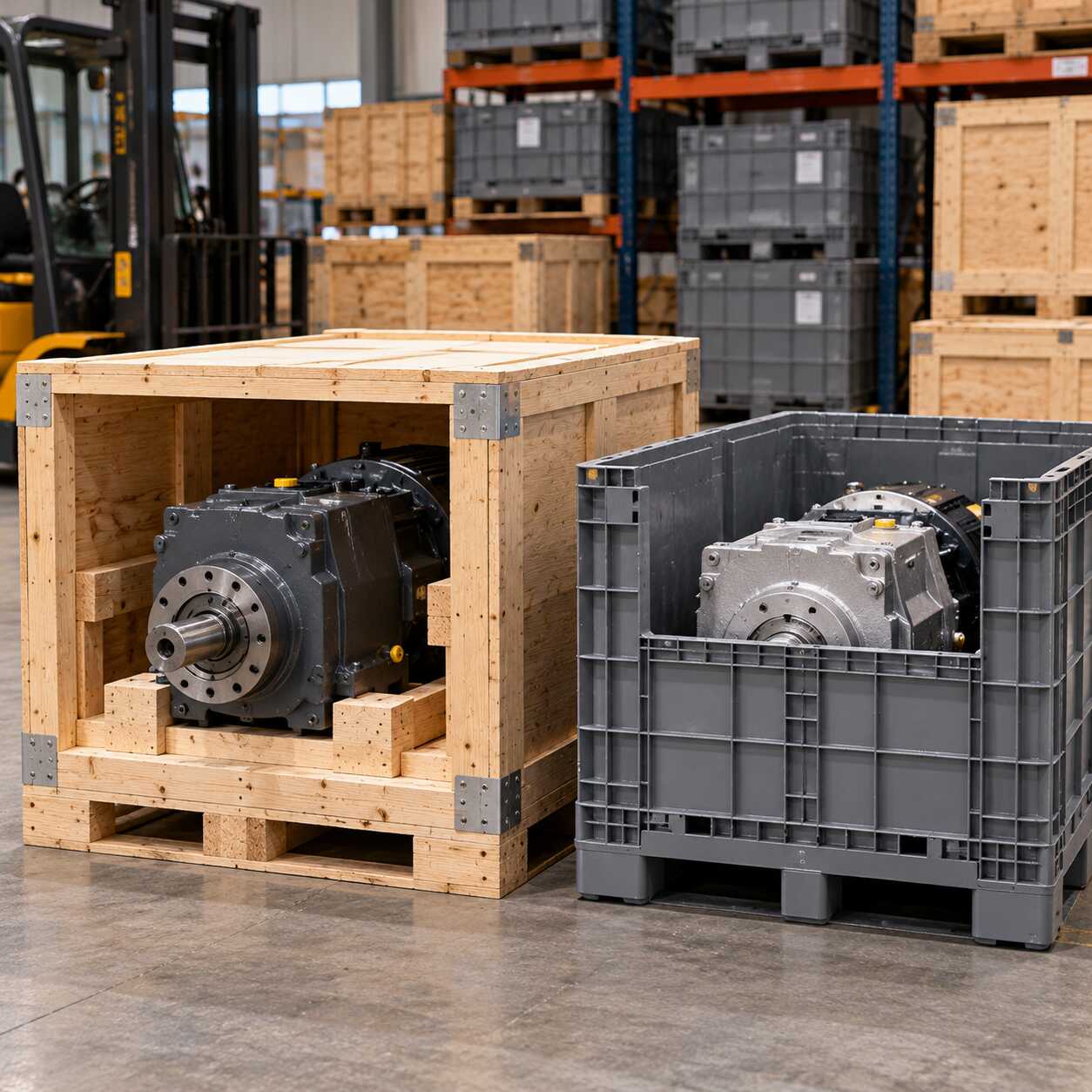
Material Durability
Material durability is a key factor when comparing wooden and plastic crates for industrial packaging. Crates used to transport machinery, automotive components and production equipment may be exposed to impact, vibration, stacking loads and handling forces. Maintaining structural integrity under these conditions is important for product safety. Because wood and plastic have different mechanical properties, durability should be assessed in relation to the product’s weight and conditions of use.
The material alone does not determine a crate’s strength. Panel thickness, connection system, supporting base and manufacturing method also affect performance. Two crates made from the same material may have different load capacities because of differences in their construction.
Structural Strength of Wooden Crates
Wooden crates can be designed to fit a product using materials such as lumber and plywood. Support skids, cross-members and other structural elements can support heavy loads at specified points. The ability to adapt the construction to the product’s geometry is a particular advantage of custom-sized wooden crates.
However, the wood’s moisture content, grain direction and visible defects can affect its strength. Improper storage or inadequate connections can also compromise the crate’s performance in transit.
Material Properties of Plastic Crates
The durability of plastic crates varies according to the polymer used and the manufacturing method. Some models can be advantageous in routine warehouse operations because of their moisture-resistant surfaces and ease of cleaning.
However, each product should be assessed for how its plastic material responds to temperature changes, sustained loads and impact. For heavy equipment in particular, verify the load limits specified by the crate manufacturer.
Material Durability Comparison Checklist
- Impact resistance: Assess whether the packaging is suitable for expected handling and transport movements.
- Load transfer: Check the capacity of the supporting base and support points.
- Moisture exposure: Assess how the storage environment may affect the material.
- Temperature conditions: Verify the material’s operating range.
- Construction: Inspect the connections and structural integrity.
Assessing Durability When Selecting Industrial Packaging
In procurement, wooden and plastic crates should not be compared on material properties alone. The product’s weight and centre of gravity, transport method and reuse requirements should also be considered.
Custom-designed wooden crates may be suitable for heavy products or items with non-standard dimensions. For repeated shipments of products with consistent dimensions, plastic crates with verified technical capacities may be considered. The final choice should be based on the protection the packaging provides under actual conditions of use.
Load Capacity
Load capacity is a key technical criterion when comparing wooden and plastic crates, as it determines which product groups each type of packaging can accommodate. Shipments of machinery, automotive components and industrial equipment require the product’s weight to be supported safely. The load performance of wooden and plastic crates varies according to material properties, structural design and conditions of use. Crate selection should therefore not be based on material type or external dimensions alone.
When assessing load capacity, consider not only the product’s net weight but also the total gross weight including packaging, load distribution and lifting method. The technical suitability of the supporting base is particularly important for products with an off-centre load.
Load Performance of Wooden Crates
Wooden crates can be designed around product requirements using lumber of different cross-sections, plywood and structural supports. For heavy machinery in particular, the placement of skids, cross-members and connectors helps support the load at appropriate points.
An advantage of custom-sized wooden crates is that their supporting structure can be adapted to the product’s weight and geometry. However, using wood does not automatically mean that a crate has a high load capacity. The design and connections must be verified to withstand the expected loads.
Capacity Limits of Plastic Crates
The load capacity of plastic crates depends on the properties of the polymer, the geometry of the body and the manufacturing method. Some models developed for industrial use may be suitable for routine transport operations within specified load classes.
Capacity ratings stated by the manufacturer should be reviewed together with the conditions under which they apply. Temperature, sustained loading and stacking can affect the mechanical performance of a plastic crate.
Load Capacity Comparison Checklist
- Static load: Verify the crate’s load limit when stationary.
- Dynamic load: Assess lifting and transport by forklift.
- Stacking capacity: Check that the crate can safely support loads from above.
- Load distribution: Identify point loads and support areas.
- Manufacturer data: Check the conditions under which stated capacity ratings apply.
Assessing Capacity by Product Type
Custom-designed wooden export crates may be considered for heavy machinery and large equipment. For standard-sized products shipped repeatedly, plastic crates with a suitable load capacity may offer operational benefits.
In procurement, packaging options should be compared using verified capacity data and actual transport conditions. Considering the load’s centre of gravity, forklift access and stacking requirements together helps ensure that the choice between a wooden and plastic crate is based on technical information.
Reuse
Reuse potential is an important factor in the total cost and operational efficiency of wooden and plastic crates. Using packaging for multiple shipments can reduce the need for new packaging, particularly in automotive supply, machinery manufacturing and industrial parts transport. However, reuse performance depends on more than the material. Crate design, transport conditions, maintenance requirements and management of the reuse cycle should all be considered.
One-way shipments and logistics operations with regular returns have different requirements. This distinction should inform the choice between wooden and plastic crates at the procurement stage.
Reusability of Wooden Crates
When properly designed, wooden crates can be used for multiple transport cycles. Removable panels, screwed connections and replaceable support elements can make reuse easier to plan. These features are useful for exhibition transport and regular shipments of specific equipment.
The supporting base, connections and panels should be inspected after each use. Moisture, impact and improper disassembly can affect a wooden crate’s service life. Applicable ISPM 15 requirements should also be assessed when repairing export crates for international shipments.
Reuse Benefits of Plastic Crates
Plastic crates may be suitable for closed-loop logistics systems that regularly transport products of standard dimensions. Cleanable surfaces and stack-compatible designs on some models can make warehouse operations easier.
However, plastic crates do not have an unlimited reuse life. Cracks, damaged connections, temperature effects and deformation under sustained loads can reduce their safe service life. The capacity limits specified by the manufacturer must be observed for each model.
Reuse Comparison Checklist
- Use cycle: Determine how many shipments the packaging is expected to serve.
- Returns: Assess the arrangements needed to collect and transport empty crates.
- Maintenance: Calculate inspection, cleaning and component replacement costs.
- Storage space: Compare the volume occupied by empty packaging.
- Product suitability: Verify crate dimensions and load capacity.
How Reuse Affects Total Cost
In procurement, the initial purchase price of packaging should be assessed against the planned number of uses. Return freight for empty crates, maintenance, storage and crate losses should all be included in the total cost calculation.
Standard plastic crates may be suitable for businesses with an established return network. For custom-sized loads or heavy equipment, wooden crates designed for reuse may be considered. Supporting the choice with actual usage records helps align packaging investments with operational requirements.
Repairability
Repairability is an important factor in the service life and total cost of ownership of wooden and plastic crates. In industrial transport, crates may be exposed to forklift impacts, stacking loads and repeated handling. Whether damage can be repaired safely determines if the packaging can be reused or needs to be replaced. Since repair methods differ for wooden and plastic crates, the assessment should consider both material properties and structural design.
Not all visible damage necessarily requires repair, but small cracks or deformed connections can affect transport safety. For heavy loads in particular, repair decisions should not be based on appearance alone.
Repair Options for Wooden Crates
Some structural elements of wooden crates can be replaced following a suitable design and technical assessment. Damaged side panels, connectors or auxiliary supports may be renewed depending on the construction. This can be an advantage for maintaining custom-sized and reusable export crates.
However, replacing support skids or critical connections requires the crate’s strength to be reassessed. The dimensions, material properties and installation method of replacement parts must be compatible with the existing design.
Repair and Replacement of Plastic Crates
Repair options for plastic crates depend on the polymer used and the product’s design. Some modular models allow lids, hinges or auxiliary parts to be replaced. Repairing damaged load-bearing sections may be more difficult in one-piece bodies.
The suitability of plastic welding or similar methods should be confirmed against the manufacturer’s instructions. If a crack affects load capacity and adequate strength after repair cannot be demonstrated, the crate may need to be withdrawn from service.
Repairability Comparison Checklist
- Damage location: Assess load-bearing and auxiliary components separately.
- Component replacement: Check the availability of compatible spare parts.
- Repair safety: Verify load capacity after the repair.
- Maintenance cost: Calculate labour, materials and downtime.
- Regulatory requirements: Check applicable requirements for export packaging.
Repair Decisions for International Shipments
For wood packaging subject to ISPM 15, solid wood components added during repair and the validity of the existing IPPC mark must be assessed in accordance with the applicable rules. Packaging that has been substantially remanufactured may need to be treated and marked again.
In procurement, repair frequency, spare-part costs and the potential for safe reuse should be assessed together. When choosing between wooden and plastic crates, repairability should be considered in relation to the product’s transport requirements and planned use cycle.
Environmental Impact
The environmental impact of wooden and plastic crates should not be compared solely on the basis of whether the material is natural or synthetic. The environmental performance of industrial packaging should be assessed across raw material sourcing, manufacturing, transport, reuse and end-of-life treatment. When selecting export crates, compare the life-cycle impacts of alternatives that transport the same product under equivalent safety conditions.
Environmental Characteristics of Wood Packaging
Wood is a renewable raw material, but the environmental value of this benefit depends on forest management, processing and the supply chain. Lumber sourced responsibly and well-designed wooden crates can be assessed for reuse and component replacement. Where plywood is used, adhesives, surface treatments and the separability of different materials are also relevant.
Preparing, drying and transporting wood packaging requires energy. A crate’s weight and external volume can increase transport-related environmental impacts. Environmental superiority should therefore not be claimed on the basis of the raw material alone.
Environmental Performance of Plastic Crates
Plastic crates are generally made from polymer-based raw materials. The type of material, recycled content and manufacturing method all affect the environmental assessment. Durable standard plastic crates may reduce the need for new packaging in businesses with an established return network.
However, the environmental benefits of plastic crates depend on the planned reuse actually taking place. Crates that are lost, break prematurely or travel long distances while empty may not deliver the expected benefits. Recycling options at end of life depend on the material properties and available collection infrastructure.
Environmental Impact Comparison Checklist
- Raw material source: Review the wood’s sourcing history and the plastic’s material composition.
- Number of uses: Record the transport cycles actually completed.
- Transport efficiency: Calculate empty-return volume and gross weight.
- Maintenance and losses: Track repair, breakage and replacement requirements.
- End of life: Verify options for reuse, separation and recycling.
Life-Cycle Approach to Procurement Decisions
Procurement teams should compare wooden and plastic crates using the same functional unit. For example, they can calculate the total number of crates, transport movements and maintenance operations required for a defined number of safe shipments. Requesting verifiable material information and usage data from suppliers helps avoid environmental claims based on assumptions.
Wooden crates may be suitable for one-way shipments of heavy, custom-sized equipment, while plastic crates may offer advantages in controlled, multi-cycle systems. The choice should be based on measured conditions of use and product safety.
Cost Comparison
The cost of wooden and plastic crates should not be compared on initial purchase price alone. For industrial packaging, total cost is shaped by production, transport, frequency of use, maintenance requirements and potential product damage. The most cost-effective option may vary with the packaging application in the machinery, automotive and spare-parts sectors. Procurement teams should therefore compare wooden and plastic crate costs under equivalent transport conditions.
Initial Purchase and Manufacturing Costs
Wooden crates can be made to order, particularly for products with non-standard dimensions. Material quantities, panel thickness, supporting structure and connectors all affect the price. The flexibility of custom production may be cost-effective for low-volume orders or products with varying dimensions.
The cost of plastic crates depends on the polymer used, the manufacturing method and order volume. Designs requiring a custom mould may involve a higher initial investment. Unit costs may differ for high-volume production in standard dimensions.
Transport and Storage Costs
The packaging’s gross weight and external volume can affect freight costs. When comparing wooden and plastic crates, use the packed dimensions of the same product. Lighter packaging does not always mean lower transport charges; the pricing method and loading capacity also matter.
For the return of empty crates, assess whether they can be folded, nested or stacked. The warehouse space they occupy should also be included in total operating costs.
Maintenance and Reuse Costs
For reusable packaging, relate the purchase price to the number of uses actually achieved. Wooden crates may allow component replacement and connection repairs, while maintenance options for plastic crates vary by model. Include cleaning, inspection, repairs and replacement of packaging that can no longer be used.
Total Cost Comparison Checklist
- Purchase: Compare unit prices and any mould costs.
- Freight: Account for gross weight and external volume.
- Use cycle: Estimate a realistic number of reuses.
- Maintenance: Calculate repair, cleaning and replacement costs.
- Returns: Assess the cost of transporting and storing empty crates.
- Damage risk: Include product protection performance in the assessment.
Financial Assessment for Procurement Decisions
When comparing quotations, businesses should calculate the total cost for a defined number of shipments. Wooden crates may be cost-effective for one-way exports of custom-sized products, while plastic crates may offer economic benefits in standard operations with regular returns.
A comparison based on packaging usage records, maintenance costs and actual freight charges enables procurement decisions to be based on measurable data rather than assumptions.
Selection Criteria by Industry
Whether a wooden or plastic crate is the better choice depends on the product being shipped and the industry’s logistics requirements. When selecting industrial packaging, assess load weight, product sensitivity, shipment frequency, storage conditions and reuse requirements together. Packaging used in different sectors—from machinery manufacturing to automotive supply—does not need to meet the same performance expectations. The right solution should protect the product while keeping operating costs manageable.
Packaging for Machinery and Heavy Industry
Products in machinery manufacturing and heavy industry are often heavy, irregularly shaped or have sensitive connection points. In these cases, custom-sized wooden crates may be considered because their supporting structure can be designed around the product’s characteristics.
Plastic crates should be considered only where the manufacturer has verified their load capacity and the dimensions are suitable. For heavy equipment, lifting points, centre of gravity and internal securing arrangements are priority selection criteria.
Options for Automotive and Spare Parts Logistics
Regular shipments of standard-sized parts in the automotive supply sector may make reusable plastic crates a suitable option. Ease of cleaning, stackability and return arrangements within closed-loop logistics systems are important considerations.
Custom-made wooden crates may be considered for transporting large or non-standard parts. Packaging options should be assessed alongside transport cost per part and the number of uses actually achieved.
Shipments of Electronics and Sensitive Equipment
For electronic devices and measurement equipment, environmental factors such as vibration, impact and moisture are key concerns. The suitability of internal protective materials should be determined when selecting a wooden or plastic crate.
For static-sensitive components, suitable antistatic protection should be assessed separately, regardless of the packaging material. The strength of the outer crate alone does not provide sufficient product protection.
Industry-Specific Packaging Selection Checklist
- Product characteristics: Verify weight, dimensions and sensitive areas.
- Shipment model: Determine whether transport is one-way or part of a return loop.
- Protection level: Assess impact, vibration and environmental conditions.
- Operational fit: Check storage, stacking and forklift access.
- Total cost: Compare purchase, transport, maintenance and return costs.
- Export requirements: Review applicable packaging regulations and ISPM 15 requirements.
Procurement teams should translate industry requirements into a technical specification and compare wooden and plastic crate options against the same criteria. Verifying the capacity, material and usage data provided by suppliers helps establish a measurable balance between safety, cost and operational efficiency when selecting packaging.