
 Türkçe
 English
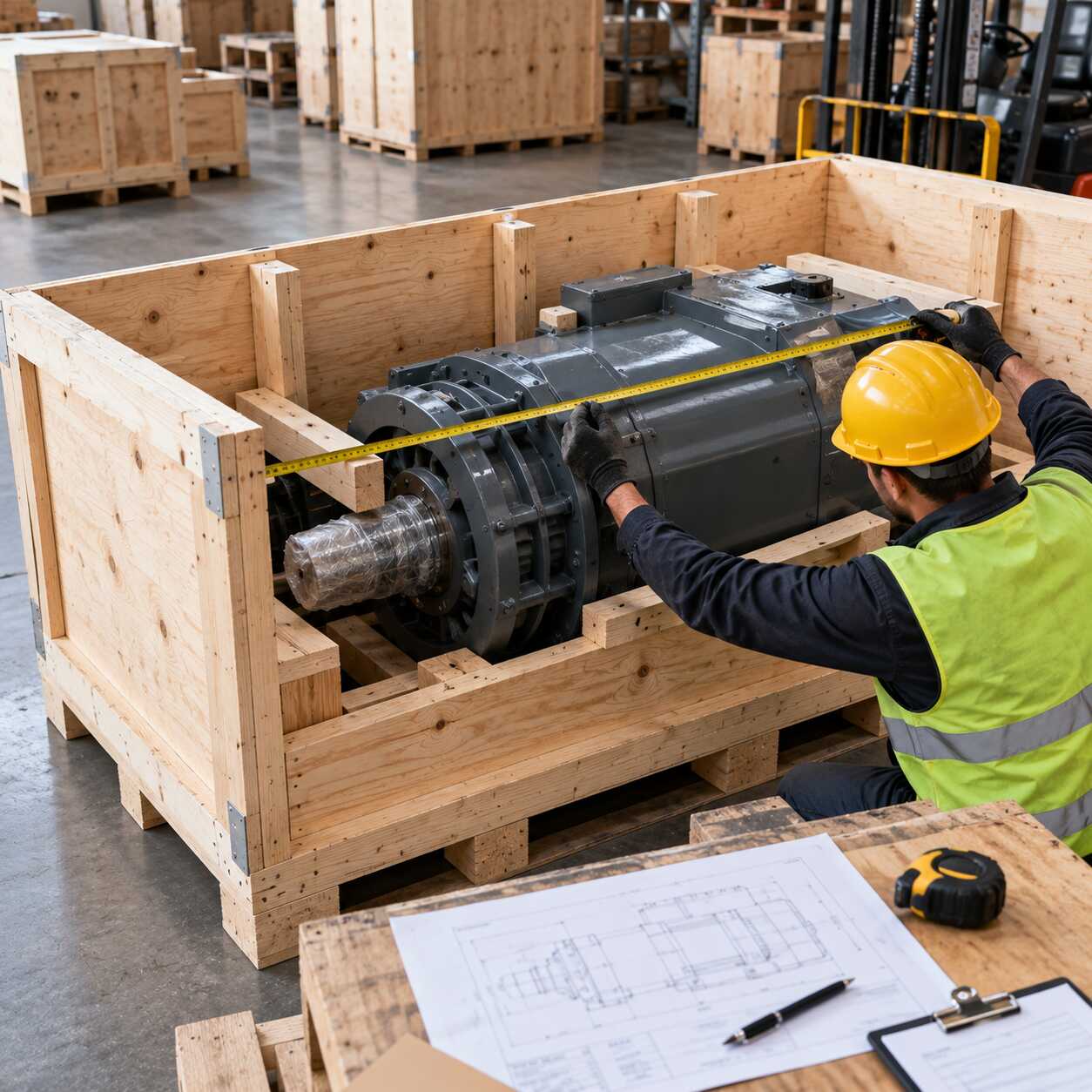
Product Dimensions
The first information needed when ordering a custom wooden crate is a complete and accurate set of dimensions for the product to be packaged. Wooden crates used to transport machinery, automotive parts, and industrial equipment are designed around the product's geometry and protection requirements. Incomplete or inaccurate dimensions can lead to design revisions and affect shipment preparation.
For custom wood packaging, sharing only the product's length, width, and height may not be sufficient. Protruding connections, moving parts, and delicate surfaces should also be measured. When determining the crate's internal dimensions, allow enough working clearance to position, secure, and, where necessary, remove the product.
Product Length, Width, and Height
Specify the principal dimensions in millimeters and in a clearly defined order when requesting a wooden crate quotation. Show on the technical drawing which directions correspond to length, width, and height. For asymmetric equipment in particular, three overall dimensions alone may not accurately define the product's actual outer envelope.
Measure protruding features such as motor connections, pipe outlets, control panels, and fixed feet separately. If any components will be removed before transport, use the dimensions of the product in its shipment-ready configuration.
Difference Between Internal and External Crate Dimensions
For custom wooden crates, internal dimensions define the usable space for the product, while external dimensions describe the overall size of the completed package. Wooden panels, load-bearing skids, support members, and the lid structure all affect the external dimensions.
This distinction is especially important for container and vehicle loading. Even if the internal space suits the product, verify separately that the crate's external dimensions comply with the transport vehicle's limits.
Dimension Checklist for Wooden Crate Orders
- Overall dimensions: Specify the product's length, width, and height.
- Protruding components: Measure connection points and parts extending beyond the main body.
- Shipping orientation: Define the direction and position in which the product will be transported.
- Protection clearance: Assess the space needed for internal supports and protective materials.
- External dimension limits: Check vehicle, container, and loading-opening restrictions.
Providing Dimension Information to the Manufacturer
Sharing technical drawings and dimensioned product photographs with the wooden crate manufacturer reduces uncertainty during quotation preparation. State the product configuration in which the measurements were taken and disclose any changes expected during production or assembly before placing the order.
For corporate procurement, keep an approved record of dimension information. Verifying product and packaging dimensions together before production helps ensure the custom wooden crate is designed for the actual shipping requirements.
Product Weight
Product weight is essential information when ordering a custom wooden crate because it informs the design of the supporting structure and safe shipping conditions. For packaging machinery, automotive parts, and industrial equipment, assess the strength of the crate base, dimensions of the load-bearing skids, and fastener selection against the product's weight. A crate designed using incomplete or estimated weight information may experience unexpected structural stress during loading.
In every application, giving the wooden crate manufacturer only an approximate product weight may not be sufficient. The product's center of gravity, support points, and transport orientation also affect the design. For machinery with weight concentrated in a specific area, knowing the load distribution is as important as knowing the total weight.
Net Weight and Gross Weight
For custom wood packaging orders, net weight is the weight of the product to be packaged. Gross weight is the combined weight of the shipment-ready product, crate, and other packaging components.
Use gross weight when assessing forklift capacity, selecting transport vehicles, and planning loading. Once the crate is complete, compare the resulting total weight with the information to be used in shipping documents.
How the Center of Gravity Affects Crate Design
The product's center of gravity plays an important role in positioning supports and forklift entries in the wooden crate base. For asymmetric machinery, the center of gravity may differ from the geometric center, increasing the tendency of the load to tilt forward or sideways during lifting.
Support the manufacturer's center-of-gravity information with technical drawings. For critical applications where this information is unavailable, have qualified technical personnel assess the lifting arrangement.
Weight Checklist for Wooden Crate Orders
- Net weight: State the verified weight of the product to be packaged in kilograms.
- Weight distribution: Identify concentrated load areas and the center of gravity.
- Support points: Show the base and connection areas that can safely support the product.
- Lifting method: Provide operating details for forklifts, cranes, or other equipment.
- Gross weight: Verify the total weight of the completed package before shipment.
Technical Assessment for Heavy-Load Wooden Crates
For custom wooden crates designed for heavy loads, plan the load-bearing base for the expected lifting and transport forces. Do not select timber dimensions, cross-member placement, and fastener layout based solely on the product's static weight. Also consider dynamic effects that may occur during forklift movement and handling.
For corporate procurement, including verified weight information in the technical specification makes quotations easier to compare. Sharing product weight, center of gravity, and lifting conditions with the manufacturer helps ensure that the wooden export crate is designed for its actual use requirements.
Transport Method
Defining the transport method in advance helps ensure that a custom wooden crate is designed for the actual logistics conditions. Shipping machinery, automotive parts, and industrial equipment by road, sea, or air can involve different operational requirements. Transit time, the number of transfers, loading equipment, and possible environmental conditions all affect the crate's construction and protective packaging.
For export crate production, providing only the destination may not be enough. Also specify the vehicles to be used, whether a container is involved, and whether a forklift or crane will be needed for loading. This information is used to plan the load-bearing base and restraint system.
Wooden Crate Requirements for Road Transport
During road transport, wooden crates may experience dynamic effects such as vibration, sudden braking, and changes in direction. Assess the crate base, product restraint points, and fasteners with these conditions in mind.
Vehicle dimensions, loading height, and the positioning of tie-down equipment are also important to the design. For heavy machinery in particular, plan suitable securing points to hold the crate safely on the vehicle.
Design for Sea and Container Shipments
Transit time, changes in humidity, and port transfers can affect packaging requirements during sea transport. Compare the wooden export crate's external dimensions with the container door opening and available interior space.
For moisture-sensitive equipment, consider barrier materials, desiccants, or additional protective solutions based on the product's characteristics. Select protective materials to suit the technical requirements of the product being transported.
Information to Provide About the Transport Method
- Transport mode: Specify road, sea, air, or multimodal transport.
- Transport vehicle: Share container type, vehicle dimensions, and loading openings.
- Handling method: Identify forklift or crane use and required lifting points.
- Transfer plan: Describe expected loading and unloading stages.
- Product protection: Explain sensitivities to vibration, moisture, and impact.
How Transport Information Affects the Quotation
Clearly defining the transport method in a custom wood packaging quotation helps assess material selection and construction details accurately. Do not assume the same crate design will be adequate for different shipping scenarios.
For international shipments, separately check the destination country's current plant health requirements for solid wood components within the scope of ISPM 15. Sharing the route, loading method, and product sensitivities with the manufacturer helps ensure the custom wooden crate is planned for the shipment requirements.
Destination Country
Providing the destination country in advance when ordering a custom wooden crate helps ensure that the packaging is prepared for international trade requirements. Wooden crates used to export machinery, automotive parts, and industrial equipment must be assessed not only for transport safety, but also for the destination country's plant health regulations. For export packaging containing solid wood components in particular, ISPM 15 provides a framework intended to reduce the risk of harmful organisms being transported between countries.
Providing only the destination country's name may not be sufficient. Share the transit route, delivery location, and the importer's packaging requirements with the manufacturer as well. Verify country-specific requirements for the shipment date; do not assume that information used for previous shipments is still valid.
ISPM 15 Requirements for Wooden Export Crates
Solid wood packaging within the scope of ISPM 15 must receive an appropriate phytosanitary treatment and carry a valid IPPC mark. Heat-treated packaging uses the HT treatment code. The mark includes the IPPC symbol, country code, authorized facility code, and treatment code.
Packaging made entirely from processed wood materials such as plywood or OSB may be exempt from the standard. Solid wood skids and blocks used in the same crate must, however, be assessed separately.
Checking Import Requirements by Country
Markets such as the European Union, the United States, Canada, Australia, and New Zealand apply ISPM 15 requirements to wood packaging. Exemptions, inspection methods, and additional country-specific conditions may differ.
For example, the European Union applies treatment, debarking, and marking requirements to relevant wood packaging arriving from outside the Union. The United States may refuse entry to shipments containing non-compliant wood packaging. Check these requirements against official sources before placing the order.
Destination-Country Checklist for Wooden Crate Orders
- Destination information: Specify the final destination country and delivery location.
- ISPM 15 scope: Verify treatment requirements for solid wood components.
- IPPC mark: Check authorization and marking requirements.
- Import conditions: Research current exemptions and additional requirements.
- Shipment records: Prepare required treatment and traceability information.
How Destination Information Affects the Quotation
For custom wood packaging quotations, the destination country can affect material selection, treatment planning, and the production schedule. Verify current obligations against Turkey's wood packaging regulation dated July 26, 2024, and amendments dated December 30, 2025.
Providing the destination country's requirements to the wooden crate manufacturer before ordering helps exporters, procurement teams, and logistics teams select suitable packaging. This information also supports verifiable technical specifications and shipment preparation plans.
Storage Conditions
Defining storage conditions in advance when ordering a custom wooden crate is important for protecting the product both before shipment and after delivery. Wooden crates built for machinery, automotive parts, and industrial equipment may be exposed to varying temperatures, humidity levels, and environmental conditions. Storage duration and location can affect crate construction, protective packaging materials, and product restraint methods.
For custom wood packaging, state whether the product will be held in a covered warehouse or outdoors. Also assess the pre-shipment holding period, transfer points, and the storage plan at the destination.
Differences Between Indoor and Outdoor Storage
In covered storage, wooden crates can be protected from direct rain and sunlight more readily. However, indoor environments do not always provide stable humidity and temperature. Poor ventilation or condensation may require additional protection, particularly for moisture-sensitive products.
For outdoor storage, consider rain, sunlight, temperature changes, and ground moisture. Sharing these conditions when ordering a wooden crate allows suitable outer protection and elevation above the ground to be assessed.
Packaging to Manage Moisture and Corrosion Risk
Moisture control may be important for metal surfaces, electronic components, and sensitive machine parts. Depending on product requirements, consider a moisture barrier, suitable protective covering, or desiccant material. Determine the quantity and application of these solutions based on product characteristics and expected storage duration.
Do not assume that a wooden crate is completely sealed from the external environment. The closure method and maintaining package integrity during storage are as important as applying the protective system.
Storage Checklist for Wooden Crate Orders
- Storage location: Specify a covered warehouse, partially covered area, or open yard.
- Holding period: Share estimated storage and transfer durations.
- Environmental conditions: Assess humidity, temperature changes, and exposure to rain.
- Product sensitivity: Identify risks from corrosion, moisture, and surface damage.
- Placement plan: Check ground contact, stacking, and forklift access.
Including Storage Information in the Production Specification
For corporate procurement, adding storage requirements to the technical specification makes it easier to compare suitable materials and protection options during quotation. For heavy equipment that will be stored for an extended period, separately assess whether the crate base is suitable for the floor conditions.
Sharing the storage environment, holding period, and product sensitivities with the packaging manufacturer helps ensure the custom wooden crate is designed for actual use conditions. Considering storage plans both before and after shipment allows product protection requirements to be defined during production.
Order Quantity and Lead Time
Defining quantities and lead times in advance for a custom wooden crate order helps plan production capacity and the shipping schedule accurately. Crates used to package machinery, automotive parts, and industrial equipment may require different materials and labor depending on the product. Clarifying order quantity, delivery date, and production priorities reduces uncertainty during quotation discussions with the supplier.
For custom wood packaging requests, providing only the total number of crates may not be enough. Specify whether all crates share the same dimensions and construction, whether they are for different products, and whether delivery will be made in one shipment or several. This information affects operations from material procurement through assembly planning.
How Order Quantity Affects Production Planning
Order quantity is important for calculating raw material needs and planning production resources. The process for producing a batch of crates with identical specifications differs from that for crates made in various dimensions.
For bulk wooden crate orders, plan cutting, assembly, and quality inspection stages. For requests covering different product groups, it may be appropriate to prepare a separate technical drawing and bill of materials for each crate type.
Setting the Lead Time
When estimating production lead time, account for design approval, material procurement, manufacturing, required treatments, and delivery arrangements. For custom wooden crates in particular, production start may depend on receiving complete technical information.
Include applicable ISPM 15 requirements for solid wood components in the production schedule for export shipments. Assess the effect of heat treatment and marking processes on the lead time with the supplier when placing the order.
Quantity and Lead-Time Checklist for Wooden Crate Orders
- Order quantity: Specify the total number of crates and any different crate types.
- Technical distinctions: Define the dimensions and construction of each crate type.
- Delivery date: Clearly state when the crates are required.
- Phased delivery: Create a delivery plan based on production or shipping stages.
- Additional processes: Specify heat treatment, marking, and protective packaging needs.
Coordinating Procurement and Production Schedules
Including quantity and lead-time information in the written order specification clarifies expectations between the manufacturer and customer. With short delivery windows in particular, delayed technical approvals or later design changes can affect the production plan.
For custom wooden crate procurement, purchasing, production, and logistics teams should work from a shared schedule. Confirming quantities, technical requirements, and delivery priorities in advance helps ensure the packaging is ready when needed and suited to the planned shipping conditions.