
 Türkçe
 English
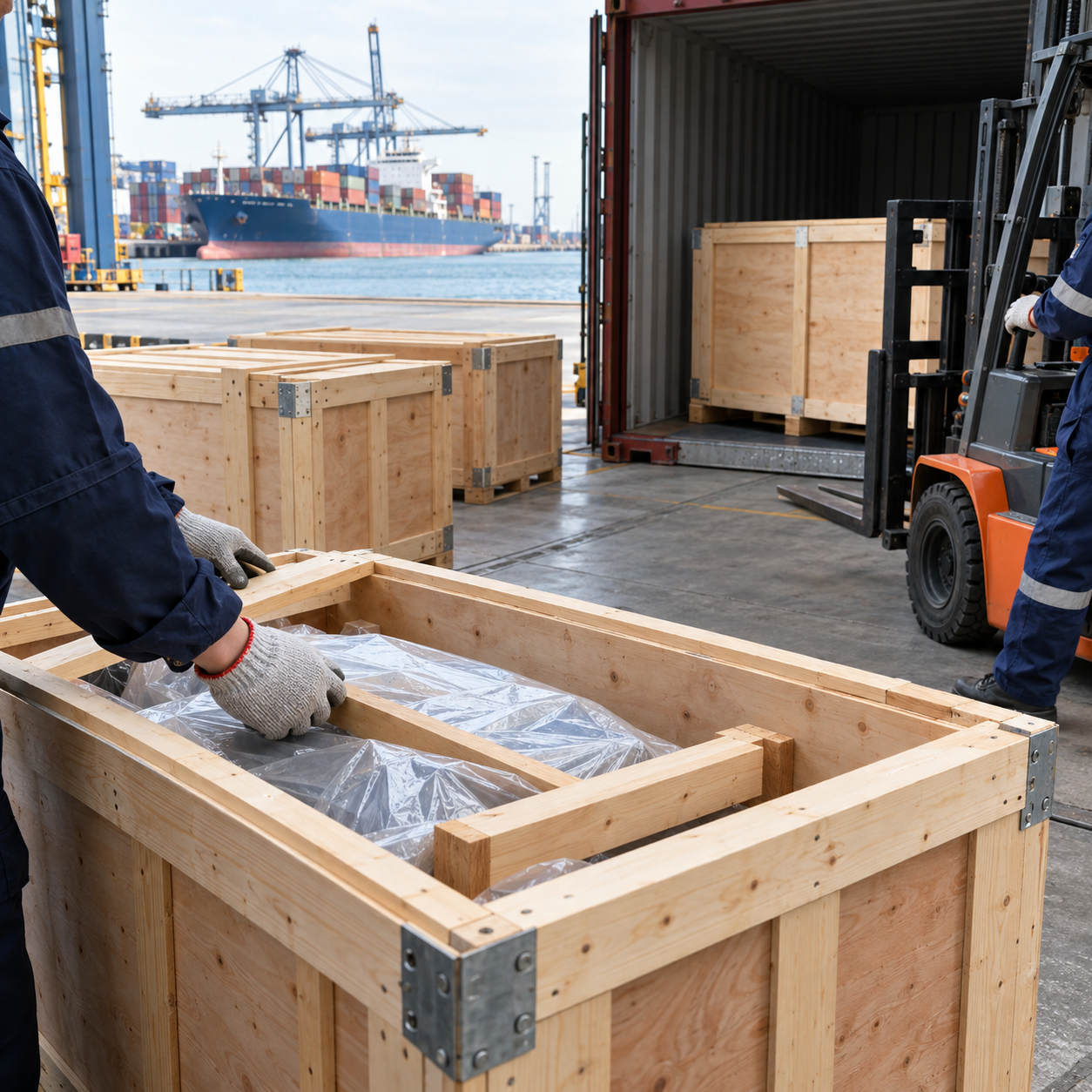
Risks of Non-Compliant Wood Packaging
Using non-compliant wood packaging in international trade is an operational risk that can delay export shipments during customs and plant health inspections. Wooden crates, pallets, and load supports used to transport machinery, automotive parts, and industrial equipment must meet the destination country's import requirements. Treatment or marking deficiencies in packaging within the scope of ISPM 15 can affect shipment schedules and logistics costs.
Exporters should assess wood packaging compliance separately from product protection. Structural strength and compliance with plant health regulations are different inspection areas. An export crate can be physically sound yet still be rejected at import if it does not meet treatment and marking requirements.
Why Wood Packaging Can Cause Customs Delays
ISPM 15 aims to reduce the risk of harmful organisms being transported in certain wood packaging materials used in international trade. Solid wood components within the standard's scope must be treated appropriately and identified using the authorized marking system.
Missing, illegible, or unverifiable IPPC marks on wooden export crates can cause problems during inspections. Risk can also arise if treated packaging is later repaired with non-compliant parts or if new wooden supports are added without being checked.
Effects of Non-Compliance on Export Operations
Competent authorities in the destination country may impose measures such as additional treatment, separation, re-export, or destruction if non-compliant wood packaging is found. The action taken depends on the country's regulations and the non-compliance identified.
These measures can affect more than packaging costs. They can also disrupt delivery schedules, terminal operations, and the customer's production plan. Packaging compliance should be part of delivery risk management, particularly for time-critical industrial shipments.
Identifying Risks from Non-Compliant Wood Packaging
- Material scope: Assess ISPM 15 requirements for solid wood crates, pallets, skids, and blocks.
- Treatment compliance: Verify that required heat treatment was performed by an authorized provider.
- IPPC mark: Inspect the mark's codes, legibility, and application.
- Packaging integrity: Check repairs, part replacements, and reuse.
- Country requirements: Research current import conditions and possible additional measures in the destination country.
Assessing Risks Before Wood Packaging Procurement
Corporate purchasing teams should assess a wood packaging supplier's authorization status, production methods, and traceability records when placing an order. Current wood packaging regulations in Turkey include additional provisions related to treatment and marking.
It is important for the exporter, packaging manufacturer, and logistics provider to clarify product characteristics, destination country, and the wood components to be used in advance. Verifying current official regulations and packaging compliance before loading helps manage the risk of customs delays caused by wooden crates.
Problems Caused by Missing IPPC Marks
A missing IPPC mark on an export shipment can make it difficult to verify the plant health compliance of wood packaging. Marking deficiencies on export crates, pallets, and load supports containing solid wood can cause delays during inspections in the destination country. Applying heat treatment alone is not sufficient for wood packaging within the scope of ISPM 15; the required marking must also be applied under the oversight system of an authorized organization.
An absent, erased, or illegible IPPC mark creates uncertainty about packaging compliance. Exporters should check for these risks during crate production and shipment preparation.
Information Required on an IPPC Mark
The ISPM 15 marking system includes the IPPC symbol, a two-letter country code, an identification code for the authorized producer or treatment provider, and the treatment code. Wood packaging produced in Turkey uses the country code TR. The HT code identifies heat treatment.
The mark must be visible, legible, durable, and difficult to transfer to another package. Where possible, the standard calls for the mark to be applied to two opposite sides of the packaging. Hand-drawn marks or marks that do not follow the valid format should not be considered compliant.
Operational Effects of Missing or Incorrect Marking
Wood packaging arriving without a mark or with an invalid mark may be subject to intervention by plant health authorities. Measures vary according to the destination country's regulations and may include additional treatment, re-export, or destruction.
This risk is particularly important for large wooden crates used to export machinery. If the product must be removed from the packaging or repacked, delivery schedules and operational costs can be affected.
Pre-Shipment Checks for IPPC Marks
- Mark presence: Verify that packaging within the scope of ISPM 15 carries the required mark.
- Code completeness: Check country, provider, and treatment codes.
- Legibility: Ensure the mark is not obscured by paint, dirt, or protective coatings.
- Authorization: Verify that marking was performed by an authorized provider.
- Repair checks: Reassess replaced wood components and reused crates.
Correcting Marking Non-Compliance
Applying a new mark to packaging without proper verification is not an appropriate corrective action when an IPPC mark is missing. First verify the treatment history of the materials and the records of the authorized provider. Where necessary, plan re-treatment of the packaging or replacement with compliant packaging through an authorized provider.
The wood packaging regulation dated July 26, 2024, and its amendments dated December 30, 2025, should be assessed together with the provisions in force on the shipment date. A shared marking inspection procedure among purchasing, quality, and logistics teams helps reduce delays caused by missing IPPC marks at customs.
Heat Treatment Process Inspection
Heat treatment of wood crates and packaging materials used for exports is a critical inspection stage for meeting international plant health requirements. The treatment applied to export crates, pallets, skids, and load supports made from solid wood must comply with ISPM 15. Missing treatment steps or inadequate records can delay a shipment during inspections in the destination country.
Quality control for heat-treated export crates should involve more than checking for an HT code on the product. The treatment must be performed by an authorized provider, meet technical conditions, and have traceable records.
Verifying ISPM 15 Heat Treatment Conditions
For the conventional heat treatment method under ISPM 15, the entire cross-section of the wood, including the core, must reach at least 56°C for a continuous period of 30 minutes. This condition is not equivalent to the kiln environment merely reaching a particular temperature. The treatment program must demonstrate that the required temperature and duration were achieved in the wood.
Measurement systems, treatment programs, and temperature records used in a heat treatment kiln must be managed according to technical procedures established by the authorized organization. If temperature or duration requirements are not met, corrective actions must be completed before the treatment is accepted as compliant.
Checking Authorized Providers and Treatment Records
In Turkey, heat treatment and marking activities under ISPM 15 are carried out through an authorization system administered by the Ministry of Agriculture and Forestry. Exporters should check the current authorization status of the wood packaging supplier and review relevant treatment records.
Treatment date, provider information, and temperature-duration data are important for traceability. Since Turkish wood packaging regulations also include record-keeping and marking obligations, verify the provisions in force on the shipment date.
Heat Treatment Process Checklist
- Material scope: Identify solid wood components that require treatment.
- Authorization: Verify the current authorization status of the treatment provider.
- Temperature and duration: Check that treatment meets the technical conditions defined by ISPM 15.
- Treatment records: Review temperature charts, treatment reports, and relevant traceability information.
- IPPC mark: Verify the HT code and other identification details.
- Subsequent changes: Assess the effect of repairs or added components on compliance.
Preparing for Shipment After Heat Treatment
After treatment, wood packaging should be protected from recontamination during storage and production. Mixing treated materials with unsuitable wood components or carrying out uncontrolled repairs can affect packaging compliance.
Managing treatment records, IPPC marking checks, and supplier information in the same shipment file makes audit preparation easier. Verification of these details by production, quality, and logistics teams before loading helps prevent customs delays caused by wood packaging.
Packaging and Documentation Consistency
Consistency between wood packaging and shipping documents is important for managing customs procedures in international export operations. Information about wooden crates, pallets, and load supports used to ship machinery, automotive parts, and industrial equipment should match logistics records. For packaging within the scope of ISPM 15 in particular, verifying treatment, marking, and traceability information helps reduce uncertainty during import inspections.
Packaging and documentation consistency means more than preparing complete paperwork. The number, external dimensions, gross weight, and identification details of the crates physically loaded should be compared with shipment records. Failing to update documents after packaging changes can lead to operational discrepancies.
Consistency of Packaging Information in Shipping Documents
Commercial invoices, packing lists, and transport documents serve different purposes. The number of wooden export crates, packaging method, and required weight information should be presented consistently in the relevant documents. Identifying each package is particularly helpful for loading and delivery checks when a shipment contains multiple crates.
Update the packing list if crate dimensions or package quantities change after production. Gross weight calculations should include the product, wooden crate, and protective packaging components.
Relationship Between the ISPM 15 Mark and Treatment Records
A valid IPPC mark under ISPM 15 is the primary identification showing that wood packaging has received an accepted plant health treatment. A separate phytosanitary certificate is not generally required for marked packaging within the standard's scope. However, trade in wood packaging as a separate product, country-specific regulations, or contractual conditions may create additional documentation requirements.
Current Turkish requirements for traceability marks, QR codes, and treatment records for heat-treated wood packaging should also be checked. These details serve a different purpose from commercial shipping documents.
Packaging and Documentation Checklist
- Packing list: Compare crate quantity, dimensions, and weight information with the physical load.
- Commercial documents: Check consistency of product descriptions and shipment information.
- IPPC mark: Inspect mark legibility, codes, and condition on the packaging.
- Treatment records: Verify applicable traceability and authorization information.
- Revision checks: Ensure packaging changed after production is reflected in the relevant records.
Pre-Loading Document Approval
Coordinating packaging and document checks among quality, warehouse, and logistics teams before loading is important in corporate export operations. Checking the internal arrangement before closing the crate, and external markings and package count after loading, helps maintain accurate records.
Current import conditions in the destination country, regulations in force in Turkey, and documents required by the carrier should be assessed separately. Matching the physical packaging to shipment records creates a traceable process for managing customs delays caused by wooden crates.
Quarantine Risk in the Destination Country
Quarantine risk at the destination can arise when wood packaging fails plant health inspections during import. Wooden crates, pallets, and load supports used to ship machinery, automotive parts, and industrial equipment are subject to controls intended to prevent harmful organisms from spreading between countries. Non-compliance with ISPM 15 can result in cargo being held and delivery schedules changing.
Quarantine procedures are not identical in every country. Competent plant health organizations may specify different interventions according to the risk identified and national regulations. Exporters should ensure that wood packaging is inspected before shipment.
For shipments to the United States, check current requirements published by APHIS. For Canada, review CFIA requirements, including Directive D-98-08. Australian import conditions can be checked through BICON, while New Zealand requirements are published by MPI in its relevant Import Health Standards (IHS). Requirements can change, so confirm the current rules for each shipment.
Conditions That Can Create Quarantine Risks for Wood Packaging
Inspections at the destination may look for live pests, insect exit holes, sawdust-like residue, or improper marking. Missing or illegible IPPC marks make it more difficult to verify ISPM 15 compliance.
The possibility of recontamination after treatment should also be considered for heat-treated export crates. A valid IPPC mark does not guarantee that packaging will remain free of live pests under all conditions.
Possible Actions During Quarantine Inspections
ISPM 15 states that, in cases of non-compliance, competent authorities may consider measures such as temporarily holding cargo, separating non-compliant wood materials, applying appropriate treatment, destruction, or re-shipment. The action taken depends on the destination country's legal authority and inspection findings.
If heavy machinery must be removed from a wooden crate, handling, storage, and repacking can create additional operational costs. Product safety must also be planned during any intervention.
Checks to Reduce Quarantine Risks at the Destination
- ISPM 15 compliance: Verify required treatment and marking for solid wood components.
- Physical inspection: Check for signs of pests and suspicious wood surfaces.
- IPPC mark: Assess mark legibility and code validity.
- Storage hygiene: Store treated crates in conditions that reduce the risk of recontamination.
- Country requirements: Review current biosecurity and import procedures with the relevant authority, including APHIS, CFIA, BICON, or MPI where applicable.
Operational Coordination After a Non-Compliance Notice
If a quarantine notice is issued at the destination, the importer, logistics provider, and competent inspection authority should coordinate. Keep records of the packaging's production and treatment history available while assessing options under official instructions.
Supplier checks, suitable storage, and pre-loading inspections together help manage quarantine risks related to wood packaging. Defined responsibilities support more organized decisions and communication if non-compliance is found.
Supplier Quality Control
Quality control processes at wood packaging suppliers play an important role in managing product safety and customs compliance together for export shipments. Wooden crates, pallets, and load supports used to transport machinery, automotive parts, and industrial equipment must meet both mechanical requirements and applicable ISPM 15 provisions. Assessing a supplier's production capability, treatment records, and delivery inspections before ordering helps reduce packaging-related delay risks.
Quality control is not limited to a visual inspection of the completed wooden export crate. Materials used, support construction, fasteners, and plant health treatment requirements are separate inspection points.
Authorized Suppliers and ISPM 15 Compliance
In Turkey, heat treatment and marking of wood packaging are carried out under an authorization system administered by the Ministry of Agriculture and Forestry. For orders of heat-treated export crates, verify the current authorization status of the treatment provider and the validity of the IPPC mark used.
If the crate manufacturer and heat treatment provider are different businesses, responsibilities and traceability records should be clearly defined. The presence of a mark does not, by itself, demonstrate transport strength or that all production stages were inspected.
Material and Construction Checks During Production
Material selection in custom-size wooden crate production should be assessed against product weight and shipping conditions. Compare the base, skids, side supports, and fasteners with approved technical drawings.
For heavy machinery in particular, inspect load transfer to support points, suitability of forklift entries, and the internal restraint arrangement. Do not release a crate for shipment until corrections are complete if cracks, deformation, or connection problems are found in wooden components.
Supplier Quality Control Criteria
- Authorization: Verify that heat treatment and marking activities meet current regulations.
- Material inspection: Assess solid wood and plywood components for suitability for their intended use.
- Production compliance: Compare crate dimensions, support structure, and connections with technical drawings.
- Treatment records: Check heat treatment reports and applicable traceability information.
- IPPC mark: Assess mark codes, legibility, and placement.
- Final acceptance: Match the physical packaging to the order specification and shipment information.
Monitoring Supplier Performance
Corporate purchasing teams should assess wood packaging suppliers on more than price and delivery time. Dimensional compliance, production defects, corrective action records, and delivery consistency can also be included in performance reviews.
Current obligations should be checked against the phased implementation provisions of Turkish wood packaging regulations and amendments dated December 30, 2025. Linking supplier audits and pre-shipment acceptance to shared criteria supports traceable assessment of technical and regulatory compliance for wooden export crates.
Pre-Shipment Final Inspection Form
A pre-shipment final inspection form should be a standard step in export operations to reduce delays at customs caused by wooden crates and packaging. The form is intended to assess packaging condition, ISPM 15 requirements, IPPC marking, and consistency of shipment documents together. Defining inspection responsibilities in advance makes it easier to identify omissions before loading, particularly for exports of machinery, automotive parts, and industrial equipment.
Prepare the inspection form according to product characteristics, packaging type, and current import conditions in the destination country. Do not assume that the same documents or treatment requirements apply to every shipment. Record inspection results using verifiable information.
Checking Physical Packaging Suitability
First inspect the wooden export crate's external dimensions, gross weight, support base, and fasteners. Check for broken components, visible deformation, and loose connections. Compare product restraint placement with the approved technical drawing.
Assess the suitability of all relevant packaging components, including solid wood skids and supports. Do not assume that parts added or replaced later are compliant based on previous inspection results.
ISPM 15 and IPPC Marking Inspection
Verify that wood packaging within the scope of ISPM 15 meets applicable treatment and marking requirements. Inspect the country, provider, and treatment codes in the IPPC mark and confirm that the marking is legible. Assess authorization, treatment records, and applicable traceability requirements under Turkish regulations in force.
The IPPC mark is a primary indicator of appropriate treatment for packaging within the standard's scope. However, additional document requests from the import country and contractual requirements should be assessed separately.
Pre-Shipment Final Inspection Checklist
- Product and packaging: Are crate count, external dimensions, and gross weight verified?
- Structural suitability: Have the base, skids, connections, and internal restraint system been checked?
- ISPM 15 scope: Have solid wood components and applicable exemptions been assessed?
- IPPC mark: Have marking codes and legibility been verified?
- Treatment records: Have required supplier and traceability details been obtained?
- Shipping documents: Have the packing list and related transport documents been matched to the physical load?
- Country regulations: Have current import requirements for the destination country been checked?
Final Approval and Non-Compliance Management
Communicate any deficiencies identified on the inspection form to the responsible team. Do not approve packaging for shipment until corrective actions are complete. Keep the inspection date, responsible personnel, and required verification records in the shipment file.
Recheck current Turkish wood packaging regulations and plant health rules in the destination country before loading. A standardized final inspection form helps purchasing, production, quality, and logistics teams work to shared acceptance criteria and reduces uncertainty during export preparation.