
 Türkçe
 English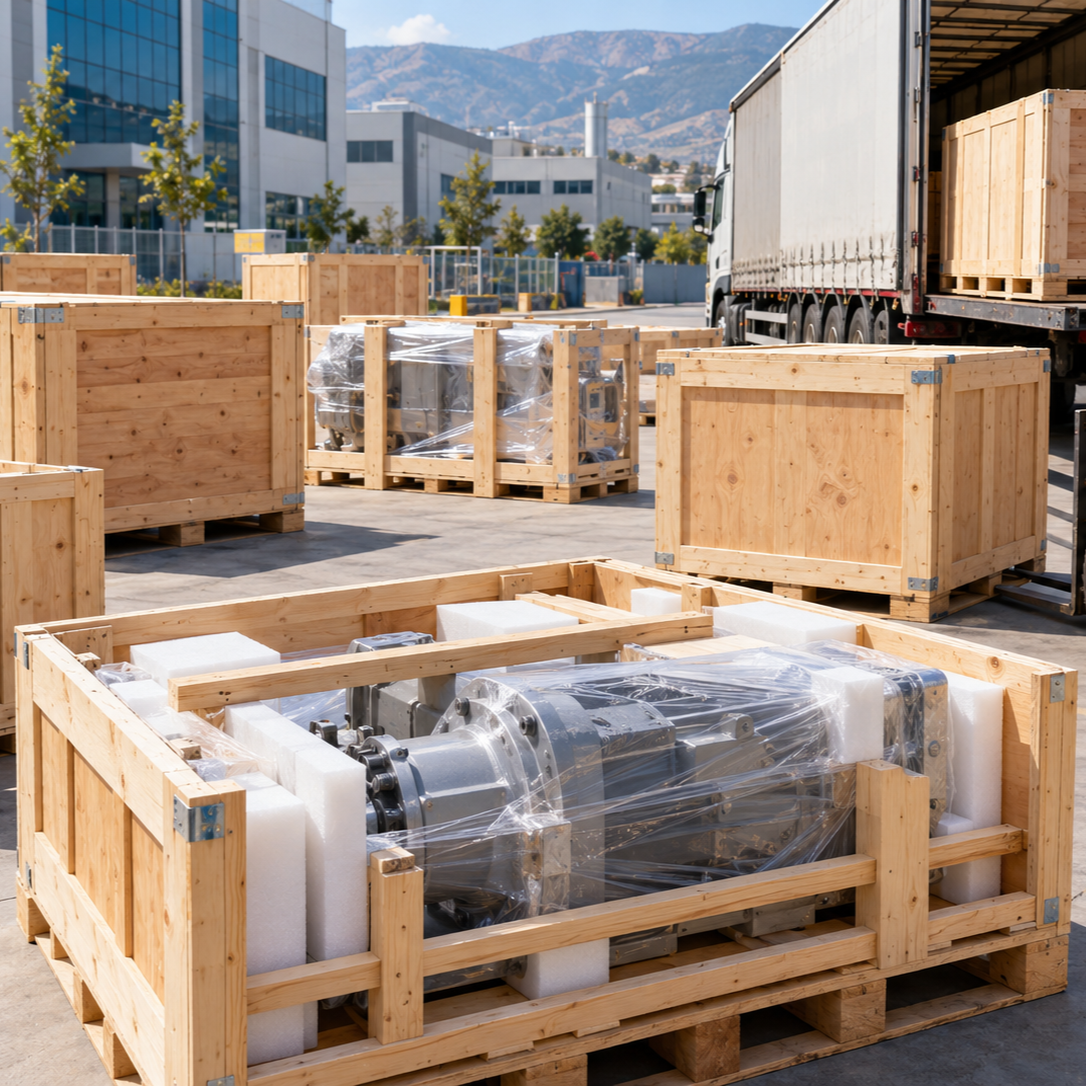
Packaging Needs of Industrial Companies in Manisa
For businesses operating in the Manisa Organized Industrial Zone, industrial packaging is an important process that protects products from the manufacturing facility to the delivery point and supports well-planned logistics operations. Products made by machinery, automotive supplier, electrical equipment, and other industrial component manufacturers can vary widely in their physical characteristics. This range makes it necessary to assess wooden export crate solutions according to product dimensions, weight distribution, surface sensitivity, and shipping conditions.
Packaging needs for companies in the Manisa OIZ go beyond protecting products from external factors. Movement from the production line to storage, forklift loading, securing goods inside a vehicle, and international shipping all affect packaging design. When standard packaging is insufficient, particularly for large machines and sensitive components, custom-size wooden crates may be appropriate.
Product Diversity and Packaging Requirements in Manisa Industry
Packaging selection for industrial businesses should consider the physical effects a product may encounter in transit as well as its intended use. Heavy equipment requires a strong support base and balanced load distribution, while machined parts may need surface protection and controlled restraint. Electrical and sensitive equipment may require protective measures against moisture, vibration, and impact.
A wooden export crate can be configured with supports and restraints suited to different product groups. This flexibility helps protect parts that are difficult to package in standard sizes. During design, it is important to review lifting points specified by the machine manufacturer, the center of gravity, and sensitive areas.
- Machinery and production equipment: Requires a base structure and restraint system suited to the product's weight and support points.
- Automotive supplier components: Prioritizes protecting machined surfaces, separating parts, and limiting movement during transport.
- Electrical and electronic equipment: Requires assessment of protection against direct contact, impact, and unsuitable environmental conditions.
- Large industrial products: Can be prepared for shipment in custom-size wooden crates, with on-site packing where needed.
Planning Wooden Crates for Production and Logistics
Coordinating packaging plans with production schedules at facilities in the Manisa OIZ supports more controlled shipment preparation. Matching the crate's external dimensions and base structure to warehouse equipment can make internal transport and loading easier. Forklift entry direction, load center of gravity, and the characteristics of the transport vehicle should be considered during design.
For international shipments, wooden packaging must also be assessed against applicable plant health requirements in the destination country. Treatment and IPPC marking requirements under ISPM 15 may apply to export crates made from solid wood. Structural strength and international compliance requirements should be assessed separately.
Sharing Technical Information for Business Packaging Procurement
Providing product dimensions, weight information, technical drawings, and shipping method in advance helps prepare a packaging design suited to the need. For businesses with recurring shipments, defining crate dimensions and internal arrangements by product group supports operational consistency across repeat orders.
Coordinating packaging design among production, warehouse, and logistics teams makes it possible to identify product-specific requirements early. For businesses in the Manisa OIZ, wooden export crate selection should be managed not merely as a purchasing decision but as a technical planning process that directly affects product safety and shipment organization.
Fast Production and Delivery Benefits
For businesses in the Manisa Organized Industrial Zone, production planning and delivery coordination are important factors in managing export crate procurement and keeping shipments on schedule. In machinery, automotive supplier, and industrial equipment manufacturing, having packaging ready on time supports operational continuity as products are prepared for shipment. Scheduling wooden export crate production around a company's shipping calendar can help reduce packaging-related delays.
Technical communication with the supplier is central to production and delivery planning for export crates in the Manisa OIZ. Sharing product dimensions, weight information, packaging type, and transport conditions in advance supports more controlled production preparation. Clarifying technical requirements early is particularly important for custom-size wooden crates.
Local Procurement and Operational Coordination
Working with regional wooden packaging suppliers can benefit manufacturing facilities in and around Manisa by supporting communication and shipment coordination where appropriate. Access to the production site, on-site measurement when needed, and inspection of the packaging delivery area can make technical planning easier.
A nearby supplier does not, by itself, guarantee fast delivery. Production capacity, material preparation, order volume, and packaging specifications must also be considered. Assessing these variables during the quotation stage helps corporate procurement teams establish a more practical supply schedule.
Planning Custom-Size Wooden Crate Production
Preparing complete technical drawings and product information for custom-size export crates reduces uncertainty during design. Production plans should account for support bases for heavy machinery, internal restraints for sensitive equipment, and applicable wooden packaging requirements for international shipping.
- Preparing technical data: Define product dimensions, center of gravity, and protection requirements.
- Coordinating production: Assess packaging design, order scope, and production schedule together.
- Aligning with shipment plans: Coordinate crate preparation with the product loading schedule.
- Quality control: Check construction, dimensions, and restraint requirements before delivery.
Coordinating Production and Logistics for Delivery
When scheduling delivery of wooden export crates, consider the business's loading area, transport equipment, and packing method. For large products, on-site assembly of the crate may be required. In such cases, site access and work arrangements should be planned in advance.
Managing recurring packaging needs alongside production schedules helps businesses in the Manisa OIZ retain technical information for repeat orders and make procurement more predictable. Regular information sharing with the wooden crate manufacturer supports a process that prioritizes product safety and shipment preparation.
Using ISPM 15-Compliant Export Crates
For companies shipping internationally from the Manisa Organized Industrial Zone, preparing wooden export crates in accordance with relevant plant health regulations is an important packaging procurement requirement. ISPM 15 is a standard intended to reduce the risk of harmful organisms being transported between countries in wood packaging materials used in international trade. Its applicability should be assessed particularly for export crates, pallets, and load supports made from solid wood.
Identifying international compliance criteria before production helps businesses in the Manisa OIZ prepare shipments in a more controlled manner. For machinery, automotive supplier, and industrial equipment manufacturers, the physical strength of wooden packaging and plant health requirements are separate areas of assessment. A suitable support structure protects the product, while checking required treatments and markings helps reduce border-crossing problems related to packaging.
Why Heat-Treated Wooden Export Crates Matter
Heat treatment is a controlled process used to reduce the risk of harmful organisms in wood packaging materials. As one of the methods recognized under ISPM 15, heat treatment must be carried out in accordance with applicable regulations and required production and inspection procedures.
When selecting a heat-treated export crate, assess not only the main crate construction but also the compliance of covered wooden supports and restraints. Wooden blocks and load supports used to package heavy machinery should also be included in pre-shipment checks.
IPPC Marking and Inspection
The IPPC mark is part of the international marking system identifying wood packaging treated in accordance with relevant plant health requirements. The mark includes codes related to the country, authorized producer or treatment provider, and treatment method. Correctness and legibility of this information are important when inspecting export packaging.
Companies exporting from Manisa should assess marking and traceability requirements in advance when sourcing wooden crates. Required records should be checked against current practices in Turkey and the destination country's requirements.
- Material suitability: Determine whether the wood components used in the crate and supports fall within the scope of the standard.
- Treatment verification: Confirm that covered wood materials have received the appropriate treatment.
- IPPC marking: Check that the mark is correct, legible, and applied appropriately.
- Traceability: Review relevant treatment records and documents required under applicable regulations.
- Destination-country requirements: Check current wood packaging requirements in the export market.
Compliance Planning for Manisa OIZ Exporters
Technical specifications for wooden export crates should be assessed alongside destination country and transport method during procurement. If wooden packaging is repaired, reused, or modified with additional support components, applicable treatment and marking requirements should be checked separately.
Sharing technical requirements with packaging suppliers in advance helps businesses in the Manisa OIZ include ISPM 15 compliance in production and shipment plans. Assessing crate construction, product restraints, IPPC marking, and required records together supports more organized packaging management for export operations.
Machinery, Automotive, and Parts Shipping
For manufacturers in the Manisa Organized Industrial Zone, packaging selection for machinery, automotive components, and industrial parts directly affects product safety and logistics efficiency. Preparing products with different weights, dimensions, and sensitivity for international transport may require technical assessment beyond standard packaging practices. Wooden export crate solutions should be planned around the product's physical structure, support construction, internal restraint system, and protective packaging arrangement.
Machinery and parts shipments have different operational requirements for export crate procurement in the Manisa OIZ. The center of gravity and lifting points are priorities for heavy machinery, while surface protection, part separation, and organized placement may be more important for automotive supplier components. Tailoring packaging design to the product group helps reduce the risk of physical damage during shipment.
Wooden Export Crates for Industrial Machinery
The base structure of a wooden export crate for industrial machinery should be assessed according to the machine's total weight and load distribution. For large equipment in particular, planning the crate base around suitable support points helps manage instability during transport.
Internal restraint systems and suitable protective supports can be used to protect sensitive machine components. Forklift access, lifting methods, and container placement requirements should also be determined before packaging production. Taking account of lifting points specified by the machine manufacturer is an important part of safe packaging design.
Protective Packaging for Automotive Supplier Parts
Mechanical components, machined parts, and fasteners produced by automotive suppliers can have different protection needs according to their surface characteristics and geometry. For products with sensitive surfaces, dividers and supports that prevent direct contact with the wooden crate help reduce the risk of friction and scratching during transport.
- Heavy machinery shipments: Assess the support base, load distribution, and lifting points together.
- Automotive components: Protect machined surfaces and sensitive connection areas with suitable materials.
- Multiple-part shipments: Plan compartments that limit contact between products inside the crate.
- International shipments: Check transport conditions and applicable wood packaging regulations.
Packaging and Logistics Planning by Product Group
Assessing custom-size wooden crates alongside product characteristics helps ensure that packaging is prepared for its intended use. Storage conditions, transport equipment, and shipping routes should be incorporated into the design process.
Sharing product drawings, weight information, and protection requirements with packaging suppliers helps industrial businesses in Manisa identify suitable crate designs. Technical coordination among production, packaging, and logistics teams supports product safety and more systematic operations for machinery and parts shipments.
On-Site Measurement Process
For manufacturers in the Manisa Organized Industrial Zone, on-site measurement is an important technical preparation step in designing a wooden export crate to suit the physical characteristics of the product being shipped. Catalog dimensions alone may not be sufficient for large machines, heavy industrial equipment, or products with complex geometries. Measurements at the production site allow the current product configuration and details that affect packaging design to be assessed.
On-site measurement should consider the machine's external dimensions, weight, protruding components, and support points together. Connections, control panels, or equipment that will remain installed during transport can affect the internal arrangement of the wooden crate. Clarifying this information before production helps reduce dimensional incompatibilities in custom-size export crate design.
Technical Inspection and Measurement at the Production Site
For export crate requirements in the Manisa OIZ, on-site measurement may include an inspection of the product's location and shipment preparation conditions. Along with the machine's width, length, and height, areas requiring protection during transport should be identified. The product's orientation inside the packaging, available support points, and required clearance for protection should be included in technical planning.
For machinery exports in particular, it is important to know the center of gravity and lifting points specified by the manufacturer. This information helps plan the base structure and forklift entries for the wooden export crate. Comparing measurements with technical drawings and product documentation supports more consistent design data.
Criteria Assessed During On-Site Measurement
The scope of an on-site inspection for custom-size wooden crate production should be determined according to product characteristics and shipping method. Technical assessment should consider not only factors affecting external packaging dimensions but also product safety and operational access requirements.
- Product dimensions: Determine the physical dimensions and protruding components of the machine in its shipping configuration.
- Weight and balance information: Assess total weight, center of gravity, and support points using manufacturer data.
- Sensitive surfaces: Identify areas requiring protection and locations where direct contact is unsuitable.
- Lifting conditions: Review requirements for forklifts, cranes, or other handling equipment.
- Packing area: Assess site conditions for crate assembly, product placement, and shipment preparation.
Applying Measurement Data to Wooden Crate Design
Information gathered during on-site measurement forms the basis for the technical design of a wooden export crate. The internal volume, support base, and restraint arrangement can be planned according to product dimensions and protection requirements. Correctly identifying support points is particularly important for managing loads that heavy equipment may experience during transport.
Coordinating measurement with production and logistics teams at Manisa OIZ facilities helps ensure that packaging design reflects actual site conditions. Assessing technical drawings, product images, and measurement records together supports complete information and more predictable shipment preparation for custom-size wooden export crates.
Benefits of Custom-Size Wooden Crates
For manufacturers in the Manisa Organized Industrial Zone, custom-size wooden crate solutions are an important way to package industrial products of different dimensions and weights safely. Standard packaging systems may not always meet transport requirements for large machines, sensitive equipment, or parts with unusual geometry. Wooden export crates designed for a specific product allow protection needs and logistics conditions to be considered together.
Custom-size production for export crate requirements in the Manisa OIZ involves more than changing the packaging's physical dimensions. The crate base, internal restraint points, forklift entries, and protective sections can all be planned according to the product. This supports a compatible packaging system for different stages from the production facility to the international shipping destination.
Protective Design Suited to Product Characteristics
One important benefit of custom-size wooden crates is that protective arrangements can be designed around the product's physical structure. A suitable base support can be planned for heavy machinery, while internal protection components can limit direct contact with sensitive equipment surfaces. Controlled clearance between the product and crate helps manage unwanted movement during transport.
Correctly identifying restraint points is particularly important for machinery and automotive supplier products. A crate designed around manufacturer-approved support areas can help avoid applying unnecessary loads to sensitive components.
Efficient Use of Storage and Shipping Space
A custom-size wooden export crate allows packaging dimensions to be planned around the product's actual requirements. Oversized crates can make storage and transport space less efficient, while insufficient internal volume can prevent protective supports from being installed. Appropriate sizing balances product safety with efficient use of logistics space.
- Product-specific sizing: Plan the internal crate volume according to the physical characteristics of the machinery and equipment.
- Controlled load distribution: Design the base structure around product weight and support points.
- Protective interior layout: Consider suitable restraint solutions for sensitive surfaces and moving components.
- Logistics compatibility: Include forklift access, warehouse placement, and transport vehicle characteristics in the design process.
Compatibility with Corporate Production and Export Processes
For businesses in the Manisa OIZ with regular shipments, recording custom-size crate designs helps manage repeat packaging requests more systematically. Design records based on product drawings, dimensions, and restraint requirements maintain consistent information between production and procurement teams.
It is also important to plan custom crate solutions alongside international shipping requirements. Compliance of the wood materials with applicable ISPM 15 conditions should be assessed separately from the packaging's structural design. Sharing technical information before production and defining shipping conditions help industrial businesses in Manisa assess wooden export crate options in a controlled manner.
Quotation Preparation Checklist
For businesses in the Manisa Organized Industrial Zone, managing the quotation process for wooden export crates correctly is important for selecting packaging suited to product characteristics. For machinery, automotive supplier, and industrial equipment shipments in particular, sharing complete technical information makes it easier to assess design requirements and define production scope. Identifying key packaging needs before requesting a quotation helps corporate procurement teams communicate more efficiently with suppliers.
For export crate requests in the Manisa OIZ, providing product dimensions alone may not be sufficient. Weight distribution, sensitive surfaces, transport method, destination country, and operational conditions in which the packaging will be used should also be assessed. Preparing this information in advance for custom-size wooden crates helps identify unsuitable design options early.
Information Needed for a Wooden Export Crate Quotation
Technical data used to prepare a quotation directly affects the crate's support structure, internal protection arrangement, and production requirements. Sharing current product documentation helps reduce inconsistencies between departments.
- Product dimensions: Provide the external dimensions of the machine or part in its shipping configuration, protruding components, and required protective clearance.
- Weight information: Share total weight, center of gravity, and support points specified by the manufacturer.
- Packaging type: Assess whether a closed wooden crate, open-frame packaging, or pallet is suitable for the product.
- Transport method: Specify shipping conditions for road, sea, or other transport methods.
- Destination country: Identify the target market to assess applicable ISPM 15 and other wood packaging requirements.
- Order scope: State the quantity required, planned shipping schedule, and any expectation of reuse.
- Technical documents: Include product drawings, photographs, and special protection requirements in the quotation assessment.
Technical Specifications and Supplier Assessment
For corporate export crate procurement, a technical specification is a key document defining the structural and operational requirements the packaging is expected to meet. Clearly stating crate dimensions, support base, internal restraint, forklift access, and inspection criteria makes it easier to compare quotations on the same scope.
Industrial companies in Manisa should assess suppliers' technical communication, production planning approach, and quality control processes together. Sharing technical drawings and shipping information for custom-size wooden export crates supports a production plan suited to product safety requirements.