
 Türkçe
 English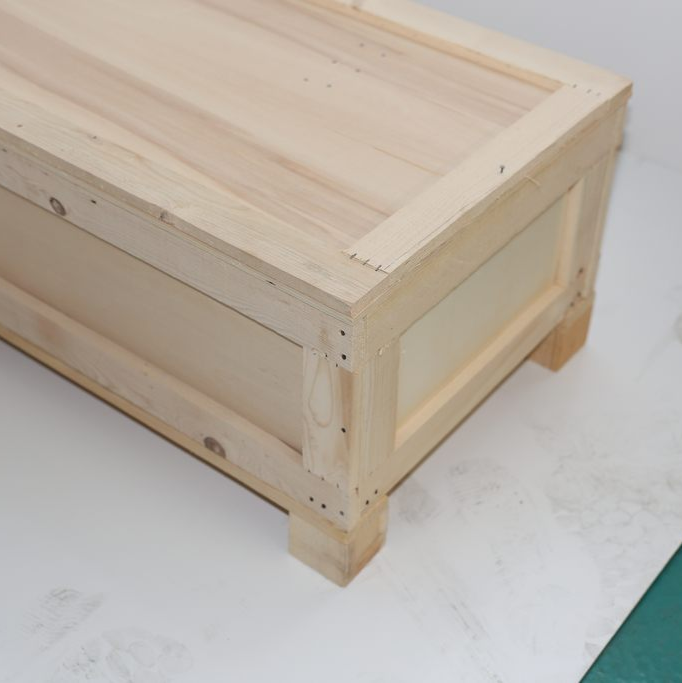
Product Weight and Dimension Analysis
The first criterion to evaluate when selecting an export crate is the product's weight and dimensions. A wooden crate is not merely packaging that contains the product; it is a structural protection system designed to keep the product secure throughout transportation. The product's net weight, the packaging weight that will contribute to the gross weight, the center of gravity, base contact points, and the load distribution that may occur during handling must all be calculated together. If this analysis is not completed correctly, the crate may look strong from the outside but still flex during loading, suffer base failure, allow the product to shift, or lose balance.
Dimensional analysis is just as important as weight. The product's width, length, and height are not used only to determine the external dimensions of the crate; they also affect internal clearance, securing space, blocking distances, lid allowance, forklift access, and container placement. When preparing an export crate, projecting components, sensitive connection points, non-removable attachments, and surfaces that require protection should be considered alongside the product's actual dimensions. Otherwise, the product may not fit correctly after the crate has been manufactured, or the internal supports may place pressure on sensitive areas.
One of the most critical aspects of weight analysis is determining how the load is transferred to the crate base. Some products rest evenly across a wide surface, while certain machines transfer their weight through only a few foot points. In these cases, the location, thickness, and spacing of the base supports must be planned accurately. A heavy machine placed on a standard wooden pallet base, for example, may create uneven pressure during transportation. A reinforced base, additional load-bearing beams, or custom blocking may therefore be required.
The transport unit used along the export route should also be considered during dimensional analysis. If the product will be shipped in a container, the crate's external dimensions must be compatible with the container's internal volume and loading plan. Vehicle body dimensions are important for road transport, volumetric weight is critical for air freight, and stacking and long-term storage conditions become more relevant for sea freight. The export crate should therefore be dimensioned not only for the product, but also for the transport system that will carry it.
Accurate product measurements also play a decisive role in cost control. An oversized wooden crate can increase material use, shipping volume, container-space loss, and handling difficulty. A crate that is too tight can prevent secure internal fixation, leave no room for protective materials, and increase the risk of damage during loading. Dimensional analysis should therefore be completed professionally to balance product safety with logistics cost.
The product's condition before shipment should also be clarified when preparing weight and dimension data. It should be determined whether the product will be shipped disassembled, whether certain parts will be removed, whether sensitive equipment will travel in a separate case, and whether multiple items will be placed in the same crate. In some projects, several controlled wooden cases may be safer and more economical than one large crate. This decision should also consider how the products will be unloaded and assembled at the destination.
Clear weight and dimension information provided during the quotation process makes accurate pricing and production planning much easier. When the technical drawing, photographs, weight, dimensional tolerances, loading equipment, and intended transport method are shared, the supplier can propose a more realistic export-crate solution. Quotations based on uncertain measurements may require revisions during production and can delay the shipping schedule.
Essential Approach to Weight and Dimension Analysis
Export-crate design should evaluate the product weight, external dimensions, center of gravity, base contact points, internal securing requirements, and transport unit together. Accurate analysis improves product safety and reduces unnecessary packaging and freight costs.
When product weight and dimensions are analyzed correctly, the export crate becomes more than packaging around the product; it becomes a planned logistics solution that makes transportation safer. When the crate base, side supports, internal blocking, lid structure, and external dimensions are determined according to the product's actual requirements, loading becomes easier, product movement during shipment is reduced, and delivery to the recipient is safer.
Transport Route and Destination Country
When selecting an export crate, the transport route and destination country are critical criteria that directly affect packaging design. The same product may require different protection for a short-distance road shipment than for sea freight, air freight, or multi-transfer international transportation. As the route becomes longer, the number of handling operations, waiting time, environmental changes, and exposure to external factors all increase. The wooden crate should therefore be planned not only according to product dimensions, but also according to every logistics stage the product will pass through.
The destination country is important from both technical and operational perspectives. Some countries inspect wooden packaging requirements more strictly, while certain markets may specify additional expectations regarding packaging quality. Port practices, customs inspections, climate conditions, storage habits, and unloading capabilities at the receiving facility should all be considered. Closed crates, moisture protection, and robust internal securing become particularly important for long-transit sea shipments.
For road transportation, the wooden crate is primarily evaluated against vibration, sudden braking, cornering forces, and securing risks inside the vehicle. Because the product remains in motion for extended periods, the base must be strong, the product must not shift inside the crate, and the outer packaging must be compatible with vehicle tie-down arrangements. An open or skeletal wooden case may be sufficient for certain short-distance road shipments, while a closed export crate provides greater security for sensitive or high-value products.
For sea transportation, the export crate must be prepared for a different set of risks. Long waiting periods inside containers, port transfers, changes in humidity, stacking pressure, and shocks during loading and unloading can all affect product safety. Base strength, internal securing, moisture protection, and container placement should therefore be planned together. This is especially important for machinery, metal equipment, electrical panels, and products with sensitive surfaces.
For air freight, weight and volume costs are more significant, so the crate must provide a more careful balance. An unnecessarily heavy wooden crate can increase transportation cost, while an overly weak crate may place the product at risk during fast handling operations. Plywood crates, lightweight wooden crates, or custom-sized cases may therefore be considered. The objective is to provide adequate protection without creating unnecessary weight or volume.
If the route includes several transfers, the crate's strength should be increased accordingly. The product may leave the manufacturer's facility, move by inland transport to a warehouse, wait at a port, be loaded into a container, be unloaded at the destination port, and then be transported again to the receiving facility. With so many handling points, the crate must be designed for the entire transfer process, not only the first loading. Forklift entry points, lifting directions, external markings, and internal securing are essential for making this multi-stage movement safer.
The climate of the destination country should also be taken into account. Humid, hot, cold, or rapidly changing temperature conditions can alter the protection required inside the packaging. Corrosion risk for metal products, moisture sensitivity in electronics, and possible deformation of wooden or decorative surfaces should be considered. Closed crates, internal protective materials, desiccants, and suitable ventilation details may be evaluated together in these cases.
How Route Information Affects Crate Selection
The transport route determines crate strength, open or closed construction, internal securing, moisture protection, forklift compatibility, and dimensional planning. The destination country affects the decision through import requirements, climate, and unloading conditions.
When the transport route and destination country are analyzed correctly, the export crate becomes a secure packaging solution adapted to the logistics conditions the product will encounter. Once the transport vehicles, number of handling operations, climate exposure, and unloading method are known, the crate can be designed more accurately. This approach reduces the risk of product damage, supports more accurate quotation pricing, and allows the shipping plan to progress with greater control.
ISPM 15 Compliance
When selecting an export crate, ISPM 15 compliance is not merely a technical detail; it is a fundamental criterion that directly affects international acceptance of the shipment. Because wooden packaging material can create biological risks when transported between countries, wooden crates, wooden cases, pallets, blocks, and support components used in export operations are expected to comply with defined treatment requirements. If compliance is not achieved, a high-quality product may still face customs problems solely because of its packaging.
ISPM 15 is particularly important for export crates manufactured from solid wood. The wood used for transportation must undergo an approved treatment to reduce the risk of carrying harmful organisms and must be marked correctly. This marking is an important reference during destination-country inspections because it shows that the wooden packaging is suitable for international transport. For B2B exporters, compliance is critical for timely dispatch, avoiding border delays, and preventing acceptance problems at the destination.
When evaluating ISPM 15 compliance in export-crate production, it is not enough to confirm only that the main wood has been treated. The supplier should verify where the material is used, whether the marking is visible, whether it will remain legible throughout transport, and whether all added support components are also compliant. Even if the primary crate structure uses treated wood, later-added blocks, strips, or supports can create risk if they do not meet the same requirements.
ISPM 15 compliance is relevant at different points in closed wooden crates, skeletal wooden cases, and pallet-based transport solutions. In closed crates, both the external surfaces and structural frame must be considered. In skeletal structures, every exposed wooden component is relevant. In pallet systems, the base and load-bearing beams require attention. When requesting an export-crate quotation, the buyer should ask not only about dimensions and material, but also about export suitability and marking practices.
ISPM 15 compliance should be evaluated together with the destination country and transport route. Some countries may perform stricter wooden-packaging inspections, and certain ports may examine markings and packaging integrity more closely. The supplier should therefore be informed of the destination country, port or border crossing, transport method, and number of handling stages. This allows the crate to be planned correctly for both product safety and international acceptance.
Plywood crates can create a different compliance consideration in some projects. Engineered wood products such as plywood may be treated differently from solid wood, but the materials used throughout the complete crate must still be reviewed carefully. If a plywood crate uses solid wood for base supports, internal blocks, or load-bearing beams, those components may still need to meet export requirements. The full material composition should therefore be clarified.
Providing the supplier with clear ISPM 15 requirements before quotation reduces the need for later production revisions. The intended export status, destination country, delivery terms, transport method, and any special packaging expectations from the receiver should be stated at the beginning. Marking surfaces, label areas, symbols that must remain visible, and opening directions can also be planned. This ensures that the quotation is evaluated not only as a price, but as a workable export-packaging solution.
Points to Check for ISPM 15
The treatment compliance of all wood, crate markings, added blocks and supports, destination-country requirements, and the supplier's export-packaging experience should be reviewed together.
When ISPM 15 compliance is managed correctly, the export crate supports not only product protection but also the smooth progress of international logistics. Properly treated and correctly marked wooden packaging builds confidence during customs inspections, simplifies acceptance in the destination country, and improves predictability in the shipping schedule. This helps exporters manage both product packaging and commercial delivery more professionally.
Forklift and Pallet Truck Compatibility
Forklift and pallet truck compatibility is a critical criterion in export-crate selection, not only for protecting the product inside the packaging but also for moving it safely during loading and unloading. Even if a wooden crate is structurally strong, serious operational risks can arise if it lacks suitable fork-entry spaces, cannot be moved with a pallet truck, or has an incorrectly calculated center of gravity. Export-crate design should therefore consider handling conditions at the warehouse, factory, port, vehicle, and receiving facility as carefully as product protection.
Forklift compatibility becomes particularly important for heavy, bulky, and high-value products. The lower supporting structure should allow forklift forks to enter easily, entry directions should be clear, and the base supports should distribute the weight evenly. During lifting, the load should not tilt, the base should not flex, and the forks should not contact the product. Fork-entry height, beam spacing, base thickness, and load distribution must therefore be evaluated together.
Pallet truck compatibility becomes decisive in warehouse movement and other low-profile handling operations. Not every wooden crate can be moved easily with a pallet truck; sufficient clearance, suitable floor height, and a balanced base structure are required. If a crate is designed only for forklift handling, moving it in a destination warehouse equipped only with pallet trucks may become difficult. This slows post-delivery operations and increases damage risk if unsuitable handling equipment is used.
Fork-entry direction is another important detail that should be defined during crate design. Some crates are suitable for lifting from only two sides, while four-way entry may be preferred for certain products. Four-way entry is advantageous when maneuvering space is limited or the crate will be moved from different directions. However, it is not necessary for every product. The decision should balance weight, crate dimensions, handling frequency, and cost. The goal is to create a safe and practical structure without unnecessary material use.
The center of gravity is one of the most critical technical issues in forklift and pallet truck compatibility. If the product is not balanced inside the crate, lifting may cause tilting, sudden movement, or tipping. Internal securing and base supports should be designed accordingly for motors, pumps, machine bodies, electrical panels, molds, and other products with concentrated weight. Marking the center of gravity, lifting direction, and special handling warnings on the crate helps logistics teams handle it more safely.
A forklift- and pallet-truck-compatible export crate also saves time during container and vehicle loading. Suitable entry clearances allow faster placement, prevent unnecessary stress on the crate, and improve safety for the loading crew. If several crates are included in the same shipment, standardizing handling directions simplifies the loading plan. Crates with different dimensions and weights should receive separate handling instructions and markings to reduce operational confusion.
The unloading equipment available at the receiving location should be identified before the crate is selected. The sender may have powerful forklifts, while the receiver may have only a pallet truck or lower-capacity equipment. If the crate is designed only for the departure point, problems may occur at delivery. In B2B exports, informing the supplier about the receiving facility's unloading conditions enables more accurate planning of the base, entry directions, and handling warnings.
Essential Handling Compatibility Checks
Fork-entry spaces, pallet truck clearance, base strength, center of gravity, lifting direction, receiving-site equipment, and handling markings should all be evaluated during export-crate design.
When forklift and pallet truck compatibility are planned correctly, the export crate can be moved more safely and efficiently throughout the shipping chain. The same packaging remains suitable when the product leaves the factory, waits in storage, is loaded onto a vehicle, is handled at the port, and is unloaded at the destination. This approach reduces product damage, supports occupational safety, shortens loading time, and contributes to a more professional export operation.
Selecting a Closed Crate, Skeletal Wooden Case, or Plywood Crate
Deciding which crate type is most suitable for the product is one of the most important steps in the export-crate purchasing process. Closed crates, skeletal wooden cases, and plywood crates may appear to serve the same purpose, but they offer different advantages in terms of protection level, weight, cost, visibility, transport route, and product sensitivity. The correct choice should therefore consider the product's physical characteristics, transport conditions, destination country, storage duration, and receiver expectations, rather than simply ensuring that the product fits inside the crate.
A closed wooden crate is preferred when the product requires a higher level of protection from the external environment. It offers stronger protection for machinery, electrical panels, electronic equipment, sensitive spare parts, metal products, and high-value industrial materials. Closed side panels, lid, and base protect the product more effectively against impact, dust, surface contact, incorrect handling, and certain environmental effects. Closed export crates can be a stronger choice for long-distance sea freight, routes with several transfers, and products likely to remain in storage.
A skeletal wooden case can be used when the product does not need to be completely enclosed but still requires secure fixation, protection, and easier handling. It may be lighter and more economical than a closed crate. External visibility can also be advantageous because warehouse personnel, customs officers, or the receiver can inspect the general condition without opening the packaging. However, a skeletal structure offers less protection against dust, moisture, surface contact, and external impact. It is therefore more suitable for durable products, surfaces with low sensitivity, and short- to medium-distance shipments.
A plywood crate can provide a smoother, more dimensionally controlled, and in some cases lighter packaging solution. Plywood panels create a cleaner external appearance in closed-crate designs and may provide more controlled internal contact for products with sensitive surfaces. Plywood crates can be suitable for air freight, projects where weight and volume optimization are important, and export shipments requiring a cleaner presentation. Base strength, connection quality, and internal support must still be designed according to product weight.
The choice between a closed crate, skeletal wooden case, and plywood crate should also reflect the product's impact risk. Closed crates are generally safer for fragile products, scratch-sensitive surfaces, electronic components, and items where appearance is important. Skeletal cases may be adequate for robust metal parts, structural components, or products that should remain visible. Plywood crates can become a strong commercial option when a clean, controlled, and presentable surface is required.
Crate type must also be evaluated in terms of cost and logistics efficiency. A closed crate usually requires more material and may increase weight, but it provides higher protection. A skeletal case may provide a cost advantage through lower material use, but it may be inadequate where environmental protection is important. Depending on the product, a plywood crate may balance protection and weight effectively. The objective is not to select the cheapest crate, but to establish the correct protection-to-cost balance according to the product risk.
If the desired crate type is not clear when requesting a quotation, alternative recommendations can be requested based on the product data. Closed, skeletal, and plywood options can be compared for the same product. Crate weight, approximate external dimensions, protection level, ISPM 15 compliance, forklift entry, production time, and compatibility with the transport route should all be reviewed. This allows the purchasing decision to be based on overall shipment safety rather than unit price alone.
Practical Approach to Crate Type Selection
A closed crate provides high protection, a skeletal wooden case offers a lighter and more visible structure, and a plywood crate can provide smooth surfaces, controlled enclosure, and a weight advantage in certain projects. The correct choice should reflect product sensitivity and the transport route.
When the choice between a closed crate, skeletal wooden case, and plywood crate is made correctly, the export shipment becomes safer, better planned, and more cost-balanced. If the required external protection, handling equipment, destination country, and opening method at the receiver are considered in advance, crate selection becomes more accurate. This approach accelerates the quotation process, reduces product-damage risk, and places the export-crate purchasing decision on a more professional basis.
Impact and Moisture Risks
Impact and moisture are two fundamental risks that directly affect product safety during transportation. A product may leave the manufacturing facility inspected, undamaged, and ready for shipment, but vibration, collision, surface pressure, environmental changes, and waiting conditions throughout the logistics chain can reduce its quality. Export-crate design should therefore consider not only product dimensions and weight, but also the physical and environmental risks likely to arise during shipping.
Impact risk becomes more significant in export shipments involving several transfers. The product may be loaded at the factory, moved to an intermediate warehouse, wait at a port, be placed in a container, be unloaded in the destination country, and then be transported to the receiving facility. Every handling stage increases the risk of movement inside the crate or external impact. The export crate should therefore be designed with base support, side protection, internal blocking, corner strength, and product-securing systems.
Protection against impact depends as much on the internal structure as on the outer body of the wooden crate. If the product remains loose or is simply placed on the base, transportation can cause sliding, movement, and stress at connection points. Internal supports, blocks, separators, and contact-protection materials restrict product movement. For products with sensitive surfaces, every contact point should be planned carefully to prevent scratching and concentrated pressure.
Moisture risk is particularly important in sea freight, long waiting periods, and exports between different climates. Temperature changes inside containers, condensation, port storage, and humid conditions can damage metal products, electronic equipment, wooden surfaces, and sensitive coatings. Although a wooden crate may provide strong external protection, insufficient moisture control can lead to corrosion, staining, deformation, or connection problems inside the packaging.
Moisture-control measures vary according to product type. Surface protection, desiccants, barrier packaging, and closed-crate construction may be used for metal equipment. Electronic products require better control of the internal environment, avoidance of direct contact with wood, and protective separation of sensitive components. For wood, furniture, and decorative surfaces, internal liners and suitable ventilation may help prevent moisture from affecting the finish.
Evaluating impact and moisture together supports more accurate crate selection. A closed crate can provide stronger protection against external factors, but additional measures may be needed to prevent moisture accumulation inside. A skeletal wooden case offers ventilation and product visibility but provides more limited protection against impact and dust. A plywood crate can provide a smooth, enclosed structure and may offer a balanced solution in terms of both protection and presentation.
Describing impact and moisture risks clearly during the quotation stage helps the supplier select a more suitable export crate. Fragile parts, sensitive surfaces, corrosion-prone areas, electronics, expected storage duration, sea-freight use, and destination climate should all be disclosed. Without this information, the quotation may offer only a standard wooden-packaging solution, while export protection should reflect the product's actual risks.
Correct Approach to Impact and Moisture Risks
Impact protection should combine internal securing, base strength, and side supports. Moisture protection should combine closed construction, barrier materials, desiccants, and surface protection suitable for the product.
When impact and moisture risks are analyzed correctly, the export crate reduces the product's exposure to physical and environmental damage throughout transportation. The product remains secured, sensitive surfaces are protected, long transit periods become safer, and product quality is preserved more effectively on arrival. This approach reduces damage costs in B2B export operations, supports customer confidence, and helps ensure that the quotation request contains accurate technical information.
Information Required Before Requesting a Quotation
The information prepared before requesting an export-crate quotation is essential for accurate pricing and suitable crate design. In B2B purchasing, stating only that a wooden crate is required is rarely sufficient, because product weight, dimensions, route, sensitivity, destination country, and loading conditions all directly affect design and cost. When these details are clear, the supplier can propose a more realistic solution, plan production more quickly, and prevent unexpected costs before shipment.
The first information to prepare is the product dimensions and weight. Width, length, height, projecting parts, non-removable equipment, sensitive surfaces, and the center of gravity should be provided as clearly as possible. If the product will be shipped disassembled, the dimensions of each part should be supplied. If several products will be placed in the same crate, a placement plan should be included. This enables the export crate to become a technical structure in which the product is securely fixed and protected, rather than packaging into which the product is forced.
The transport method and destination country should always be stated before quotation. Road, sea, air, and multimodal shipments require different crate designs. Moisture and long transit times are more important in sea freight, vibration and vehicle securing in road transport, and weight-volume balance in air freight. The destination country guides the supplier regarding ISPM 15 compliance, inspection expectations, climate conditions, and receiver acceptance requirements.
Handling information should also be included, such as whether a forklift, pallet truck, crane, or manual equipment will be used. If the supplier knows the lifting direction, whether four-way forklift entry is required, whether the crate must be moved with a pallet truck, and what unloading equipment exists at the destination, the base can be designed accordingly. For heavy products, beam positions, fork-entry height, and the center of gravity require more precise calculation. Without this information, loading and unloading difficulties may arise after production.
The product's sensitivity level and vulnerable areas should also be explained. The supplier should know whether metal surfaces are susceptible to corrosion, electronic components are sensitive to moisture, glass or ceramic parts are fragile, painted surfaces are vulnerable to scratches, or connection points must be protected from impact. These details affect crate type and internal support design. Closed crates, skeletal cases, and plywood crates can then be evaluated according to the actual risks.
The expected crate type should be stated when known, but alternatives can be requested if the correct solution is uncertain. The shipment scenario should be examined when choosing between a closed export crate, skeletal wooden case, plywood crate, and pallet-based solution. A closed crate may be safest for one project, while a skeletal structure may be sufficient for a durable product. A plywood crate may be preferable where lower weight, a smooth finish, and complete enclosure are important. Alternative quotations support a more informed purchasing decision.
Quantity, delivery date, shipping plan, and special marking requirements should also be prepared in advance. The number of crates, whether products share the same dimensions, the planned loading date, and the labels or directional markings required on the crates should be clarified from the beginning. In project exports, crate numbering, opening direction, center-of-gravity marks, fragile warnings, and receiver reference information make shipment tracking easier. These details help the supplier establish a more reliable production and delivery plan.
Preparation Checklist for a Quotation Request
Product dimensions, weight, photographs, technical drawings, destination country, transport method, ISPM 15 requirements, forklift and pallet truck compatibility, preferred crate type, sensitivity information, quantity, and delivery date should be prepared before requesting an export-crate quotation.
When the required information is prepared completely, the export-crate purchasing process becomes faster, clearer, and more reliable. The supplier can understand the product's actual requirements and propose the correct material, base construction, crate type, internal securing details, and export-compliant production method. This preparation produces a more realistic quotation and supports safer protection throughout the shipping route.